Millions of Red Crabs Begin Spectacular Annual Migration on Christmas Island

- Update Time : 03:36:05 pm, Monday, 16 November 2026
- / 42 View
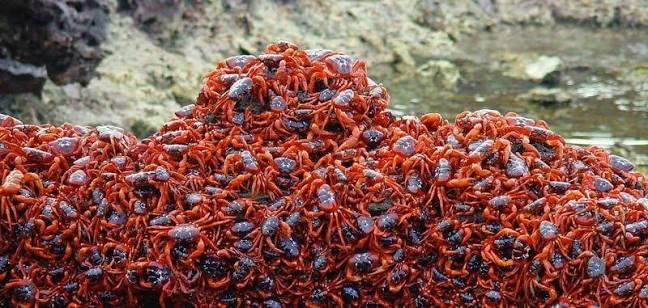
Millions of red crabs begin their annual journey towards the coast on Christmas Island, Australia.
photo: wondrous world image
Location: Christmas Island, Australia
Millions of bright red crabs have begun their spectacular annual migration on Australia’s Christmas Island, transforming roads, forests and specially constructed wildlife crossings into streams of red as the animals travel towards the coastline to breed.
The remarkable natural event, which took place across November 14 and 15, has attracted international attention as enormous numbers of crabs move together from the island’s tropical forests towards the sea.
Following the arrival of heavy wet-season rainfall, the crabs have started their seasonal journey, creating one of the most extraordinary wildlife spectacles in the Indian Ocean.
According to reports published on November 16, 2026, the migration has turned sections of the island’s roads and specially built crab bridges into busy pathways filled with moving wildlife.
The annual event is not only a fascinating natural phenomenon but also an important part of Christmas Island’s ecosystem.
Millions of Red Crabs Cover Roads and Forests
The annual red crab migration is one of Australia’s most recognisable wildlife events.
During the migration season, enormous numbers of bright red land crabs emerge from their forest homes and begin moving towards the coastline.
Their journey takes them across roads, walking tracks, rocky areas and specially constructed crossings.
Photographs and videos from the latest migration show large groups of crabs covering sections of roads and climbing over wildlife bridges designed to help them travel safely.
The colourful movement creates an extraordinary sight, with thousands of red crabs moving together across the island’s natural landscape.
The migration can also affect local transportation. Some roads are temporarily closed when large numbers of crabs cross their usual routes.
Authorities monitor crab movements and provide road access updates to help protect both wildlife and motorists.
Why Do Red Crabs Migrate Every Year?
The main reason behind the red crab migration is reproduction.
Christmas Island’s red crabs spend much of their lives in tropical forests, where they feed on fallen leaves, fruits, flowers and other organic material.
However, when the wet season begins, millions of these crabs leave their forest habitats and travel towards the coast to mate and release their eggs into the ocean.
The journey is closely connected to seasonal rainfall and the lunar cycle.
According to Parks Australia, the first significant rainfall of the wet season usually triggers the migration, which commonly takes place between October and November, although it can sometimes occur later.
The crabs also use the phases of the moon to coordinate the timing of reproduction.
This remarkable natural behaviour helps ensure that female crabs release their eggs into the sea under suitable tidal conditions.
The Important Role of Rainfall and the Moon
One of the most fascinating aspects of the Christmas Island red crab migration is how the animals coordinate their movements with environmental conditions.
Rainfall provides the moisture needed for the crabs to travel across the island without becoming dehydrated.
The lunar cycle also plays an important role in determining when the crabs reach the coastline and release their eggs.
Parks Australia explains that spawning generally takes place before dawn during a receding high tide around the last quarter of the moon.
This timing helps the newly released eggs enter the ocean and move away from the shoreline with the outgoing tide.
The combination of rainfall, moon phases and tidal movements makes the migration an extraordinary example of natural coordination.
How Millions of Crabs Are Protected During Their Journey
Protecting the migrating red crabs is a major responsibility for Christmas Island’s national park authorities.
Because the migration crosses roads and other areas used by people, vehicles can pose a significant danger to the animals.
To reduce the risk, Parks Australia prepares the island before the migration begins.
Special wildlife bridges, underpasses and roadside barriers help guide the crabs towards safer crossing points.
Authorities also install warning signs and temporarily close selected roads when large groups of crabs are moving through the area.
These conservation measures are important because the annual migration plays a vital role in maintaining the island’s red crab population.
Visitors are encouraged to follow road closure notices and instructions from national park staff.
What Happens When the Crabs Reach the Ocean?
After travelling from the forests, the crabs arrive at coastal areas where reproduction takes place.
Male crabs generally reach the coastline first, followed by females.
The animals spend time near the sea before moving to suitable coastal terraces and burrowing areas.
After mating, female crabs produce eggs and carry them in a special pouch beneath their bodies.
Each female can produce up to 100,000 eggs.
When the appropriate tidal conditions arrive, the females move towards the shoreline and release their eggs into the ocean.
The eggs hatch after entering the water, releasing tiny larvae that become part of the marine food chain.
Although enormous numbers of eggs are released, only a small proportion eventually survive and develop into young crabs.
Why Christmas Island Is Famous for Its Red Crabs
Christmas Island is an Australian territory located in the Indian Ocean, south of Indonesia.
The island is internationally recognised for its tropical rainforests, unique wildlife and extraordinary red crab migration.
Parks Australia estimates that the island is home to around 100 million red crabs, making the species one of the most important parts of its natural environment.
The crabs play an important ecological role by consuming fallen leaves and other organic material, helping recycle nutrients throughout the forest.
Their annual migration also connects the island’s forest and marine ecosystems.
For wildlife photographers, researchers and nature enthusiasts, the migration provides a rare opportunity to observe a large-scale animal movement in its natural environment.
A Natural Spectacle Attracting International Attention
The annual migration attracts visitors and wildlife enthusiasts from different parts of the world.
The sight of millions of red crabs moving across roads, forests and beaches offers extraordinary photography and video opportunities.
The event also highlights the importance of protecting natural habitats and maintaining a healthy balance between human activity and wildlife.
Unlike many major international headlines involving political disputes or economic uncertainty, the red crab migration offers a positive reminder of the remarkable natural processes taking place around the world.
As the migration continues, national park authorities will keep monitoring crab movements and managing road access to protect the animals.
Conclusion
The 2026 red crab migration on Christmas Island once again demonstrates the extraordinary relationship between wildlife, rainfall, lunar cycles and the natural environment.
Millions of crabs travelling from tropical forests towards the coastline create one of Australia’s most remarkable annual wildlife spectacles.
Beyond its visual beauty, the migration is essential for the reproduction of the species and the ecological balance of the island.
As climate conditions and environmental pressures continue to challenge wildlife around the world, protecting extraordinary natural events like this remains increasingly important.
For Christmas Island, the annual journey of the red crabs is more than a spectacular attraction. It is a vital part of the island’s natural heritage.
Sources: *Parks Australia – Christmas Island National Park, *Euronews , *Associated Press
XARLIN DESK