Singapore 1:51 am, Wednesday, 25 November 2026

Oil Tanker Fire in Strait of Hormuz Raises Global Concerns

  • Update Time : 02:45:02 pm, Monday, 16 November 2026
  • / 29 View

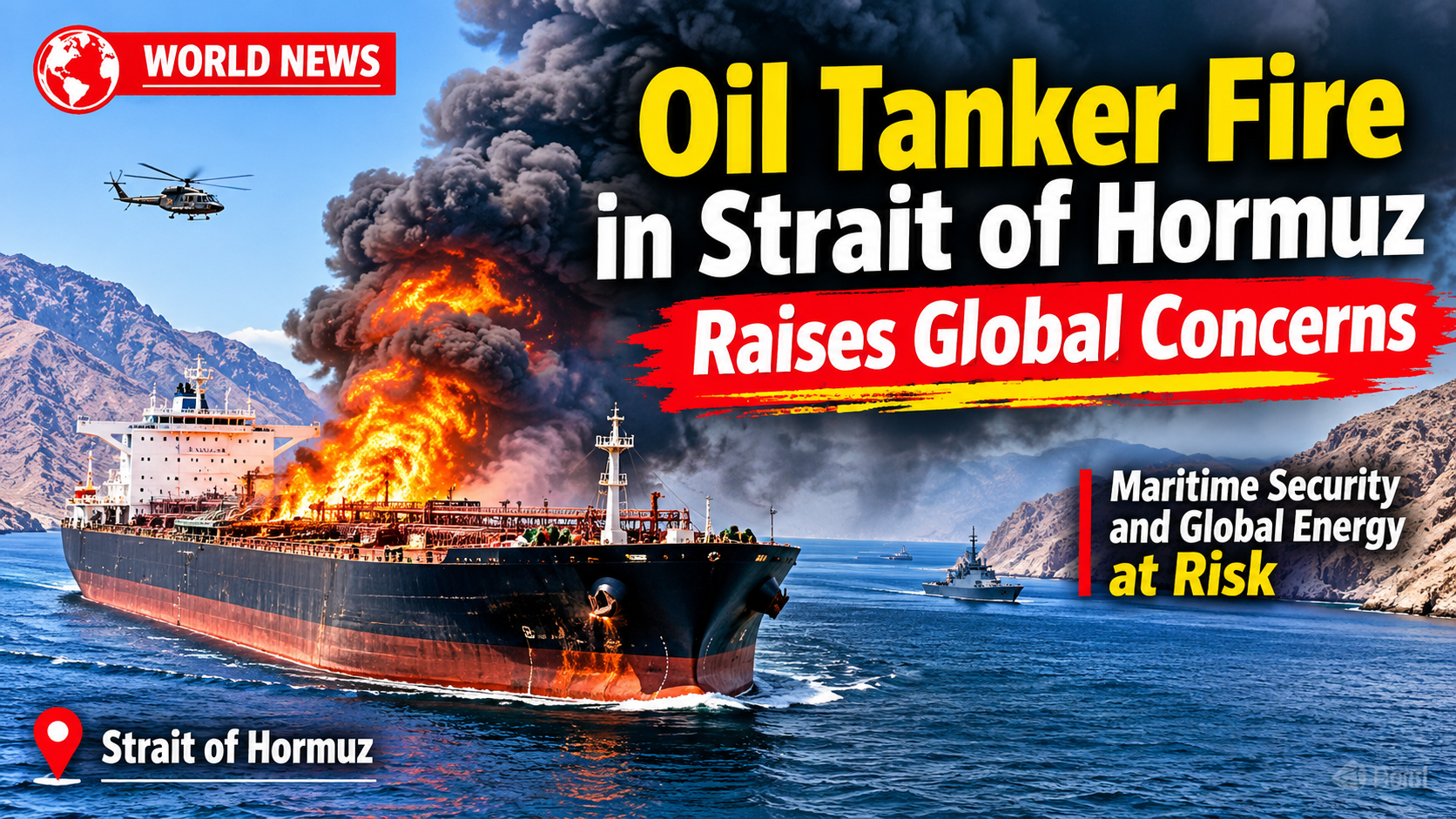
An oil tanker has caught fire after being struck by an unidentified projectile while travelling through the strategically important Strait of Hormuz, raising fresh concerns about maritime security, international shipping and global energy supplies.

The incident was reported on Monday, November 16, by the United Kingdom Maritime Trade Operations (UKMTO), which said the vessel was sailing outbound from the Gulf when the attack occurred.

According to the maritime security authority, the impact caused a fire in the tanker’s engine room. Fortunately, no casualties were reported, and all crew members were accounted for.

However, the full extent of the damage and any potential environmental impact remain unknown as authorities continue to investigate the incident.

The latest development has increased concerns about the safety of commercial vessels operating in one of the world’s most important international shipping corridors.

Tanker Struck by Unidentified Projectile

According to UKMTO, the tanker’s company security officer reported that the vessel had been struck by an unknown projectile while travelling outbound through the Strait of Hormuz.

The incident resulted in an engine-room fire, although the authority did not immediately identify the vessel, its country of registration or the party responsible.

UKMTO confirmed that all crew members were safe and no casualties had been reported.

The authority advised commercial vessels operating in the area to exercise caution and report suspicious activity while investigations continue.

The identity of the attacker and the precise circumstances surrounding the incident have not yet been established.

Why the Strait of Hormuz Is So Important

The Strait of Hormuz is one of the most strategically important maritime passages in the world.

Located between Iran and Oman, the narrow waterway connects the Persian Gulf with the Gulf of Oman and the Arabian Sea.

It serves as a major transportation route for crude oil, petroleum products and liquefied natural gas (LNG) moving from Middle Eastern producers to international markets.

Major energy exporters, including Saudi Arabia, Iraq, Kuwait, Qatar and the United Arab Emirates, depend on shipping routes connected to this region.

A disruption to maritime traffic through the strait could create serious challenges for international energy markets, particularly in countries heavily dependent on imported oil and gas.

Asian economies are especially exposed because a significant share of the energy transported through this waterway is destined for Asian markets.

Iran’s Claims About Naval Mine Incidents

The tanker fire comes amid continuing tensions and conflicting reports about maritime incidents in the region.

Iranian military authorities have separately claimed that several oil tankers were damaged or caught fire after striking naval mines while travelling through what they described as restricted shipping routes.

Iran’s Revolutionary Guard Navy has also warned commercial vessels against using routes it considers unauthorised.

However, these claims have not been independently verified by international authorities.

Reuters has reported on Iran’s statements while noting that it could not immediately verify the reported mine incidents.

Meanwhile, UKMTO has documented separate maritime security incidents involving unidentified projectiles striking commercial vessels.

The distinction is important because the available evidence does not establish that every reported tanker fire was caused by a naval mine or that a particular country was responsible.

Global Oil Markets Face Renewed Uncertainty

Any serious disruption to shipping through the Strait of Hormuz could affect international energy markets.

Oil traders, shipping companies and energy-importing countries closely monitor developments in the region because uncertainty over tanker movements can influence supply expectations and transportation costs.

Even without a complete closure of the waterway, repeated security incidents could increase insurance premiums for commercial vessels and raise the cost of transporting energy products.

Higher shipping and insurance costs could eventually place additional pressure on fuel prices and businesses that depend on international transportation.

According to Reuters reporting on November 16, oil prices moved slightly higher as fresh tanker incidents highlighted continuing risks to Middle Eastern energy supplies.

However, the broader direction of oil prices will also depend on global production, demand, inventories and diplomatic developments.

Maritime Security Becomes a Growing International Concern

The latest incident highlights the risks facing commercial shipping companies operating in waters affected by geopolitical tensions.

Oil tankers are particularly important to the international economy because they transport enormous quantities of energy across continents.

An attack, collision or other security incident involving a large tanker can create consequences beyond the vessel itself.

Potential risks include:

  • Disruption to international oil transportation.
  • Increased maritime insurance and shipping costs.
  • Delays to global energy deliveries.
  • Environmental damage from an oil spill.
  • Greater security concerns for commercial seafarers.

Maritime authorities and shipping companies must therefore continue monitoring the situation and following appropriate safety procedures.

The safety of crew members remains a major concern as commercial vessels navigate increasingly uncertain conditions.

What Happens Next?

International attention is now focused on the investigation into the latest tanker incident and the wider security situation around the Strait of Hormuz.

Authorities will need to establish the nature of the projectile, assess the damage to the vessel and determine whether the incident has caused any environmental harm.

Shipping companies may also reconsider their routes, security arrangements and insurance requirements if threats to commercial vessels continue.

Diplomatic developments involving regional and international powers could play an important role in determining whether maritime tensions increase or begin to ease.

For now, the incident serves as another warning about the vulnerability of international energy transportation routes to geopolitical instability.

Conclusion

The oil tanker fire in the Strait of Hormuz has renewed international concerns about maritime security and the stability of global energy supplies.

Although no casualties have been reported, the incident demonstrates the potential risks facing commercial vessels travelling through this strategically important waterway.

As investigations continue, governments, energy companies and shipping operators will be watching developments closely.

The security of the Strait of Hormuz remains a major international concern, with consequences that could extend far beyond the Middle East.

Sources: United Kingdom Maritime Trade Operations (UKMTO), Reuters and Associated Press.

XARLIN DESK
Oil Tanker Fire in Strait of Hormuz Raises Global Concerns

Update Time : 02:45:02 pm, Monday, 16 November 2026

An oil tanker has caught fire after being struck by an unidentified projectile while travelling through the strategically important Strait of Hormuz, raising fresh concerns about maritime security, international shipping and global energy supplies.

The incident was reported on Monday, November 16, by the United Kingdom Maritime Trade Operations (UKMTO), which said the vessel was sailing outbound from the Gulf when the attack occurred.

According to the maritime security authority, the impact caused a fire in the tanker’s engine room. Fortunately, no casualties were reported, and all crew members were accounted for.

However, the full extent of the damage and any potential environmental impact remain unknown as authorities continue to investigate the incident.

The latest development has increased concerns about the safety of commercial vessels operating in one of the world’s most important international shipping corridors.

Tanker Struck by Unidentified Projectile

According to UKMTO, the tanker’s company security officer reported that the vessel had been struck by an unknown projectile while travelling outbound through the Strait of Hormuz.

The incident resulted in an engine-room fire, although the authority did not immediately identify the vessel, its country of registration or the party responsible.

UKMTO confirmed that all crew members were safe and no casualties had been reported.

The authority advised commercial vessels operating in the area to exercise caution and report suspicious activity while investigations continue.

The identity of the attacker and the precise circumstances surrounding the incident have not yet been established.

Why the Strait of Hormuz Is So Important

The Strait of Hormuz is one of the most strategically important maritime passages in the world.

Located between Iran and Oman, the narrow waterway connects the Persian Gulf with the Gulf of Oman and the Arabian Sea.

It serves as a major transportation route for crude oil, petroleum products and liquefied natural gas (LNG) moving from Middle Eastern producers to international markets.

Major energy exporters, including Saudi Arabia, Iraq, Kuwait, Qatar and the United Arab Emirates, depend on shipping routes connected to this region.

A disruption to maritime traffic through the strait could create serious challenges for international energy markets, particularly in countries heavily dependent on imported oil and gas.

Asian economies are especially exposed because a significant share of the energy transported through this waterway is destined for Asian markets.

Iran’s Claims About Naval Mine Incidents

The tanker fire comes amid continuing tensions and conflicting reports about maritime incidents in the region.

Iranian military authorities have separately claimed that several oil tankers were damaged or caught fire after striking naval mines while travelling through what they described as restricted shipping routes.

Iran’s Revolutionary Guard Navy has also warned commercial vessels against using routes it considers unauthorised.

However, these claims have not been independently verified by international authorities.

Reuters has reported on Iran’s statements while noting that it could not immediately verify the reported mine incidents.

Meanwhile, UKMTO has documented separate maritime security incidents involving unidentified projectiles striking commercial vessels.

The distinction is important because the available evidence does not establish that every reported tanker fire was caused by a naval mine or that a particular country was responsible.

Global Oil Markets Face Renewed Uncertainty

Any serious disruption to shipping through the Strait of Hormuz could affect international energy markets.

Oil traders, shipping companies and energy-importing countries closely monitor developments in the region because uncertainty over tanker movements can influence supply expectations and transportation costs.

Even without a complete closure of the waterway, repeated security incidents could increase insurance premiums for commercial vessels and raise the cost of transporting energy products.

Higher shipping and insurance costs could eventually place additional pressure on fuel prices and businesses that depend on international transportation.

According to Reuters reporting on November 16, oil prices moved slightly higher as fresh tanker incidents highlighted continuing risks to Middle Eastern energy supplies.

However, the broader direction of oil prices will also depend on global production, demand, inventories and diplomatic developments.

Maritime Security Becomes a Growing International Concern

The latest incident highlights the risks facing commercial shipping companies operating in waters affected by geopolitical tensions.

Oil tankers are particularly important to the international economy because they transport enormous quantities of energy across continents.

An attack, collision or other security incident involving a large tanker can create consequences beyond the vessel itself.

Potential risks include:

  • Disruption to international oil transportation.
  • Increased maritime insurance and shipping costs.
  • Delays to global energy deliveries.
  • Environmental damage from an oil spill.
  • Greater security concerns for commercial seafarers.

Maritime authorities and shipping companies must therefore continue monitoring the situation and following appropriate safety procedures.

The safety of crew members remains a major concern as commercial vessels navigate increasingly uncertain conditions.

What Happens Next?

International attention is now focused on the investigation into the latest tanker incident and the wider security situation around the Strait of Hormuz.

Authorities will need to establish the nature of the projectile, assess the damage to the vessel and determine whether the incident has caused any environmental harm.

Shipping companies may also reconsider their routes, security arrangements and insurance requirements if threats to commercial vessels continue.

Diplomatic developments involving regional and international powers could play an important role in determining whether maritime tensions increase or begin to ease.

For now, the incident serves as another warning about the vulnerability of international energy transportation routes to geopolitical instability.

Conclusion

The oil tanker fire in the Strait of Hormuz has renewed international concerns about maritime security and the stability of global energy supplies.

Although no casualties have been reported, the incident demonstrates the potential risks facing commercial vessels travelling through this strategically important waterway.

As investigations continue, governments, energy companies and shipping operators will be watching developments closely.

The security of the Strait of Hormuz remains a major international concern, with consequences that could extend far beyond the Middle East.

Sources: United Kingdom Maritime Trade Operations (UKMTO), Reuters and Associated Press.