Singapore 8:06 pm, Wednesday, 25 November 2026

Israel Receives Less Than 1% of America’s Budget — Why Does It Spark So Much Outrage?

  • Update Time : 07:50:33 am, Friday, 13 November 2026
  • / 32 View

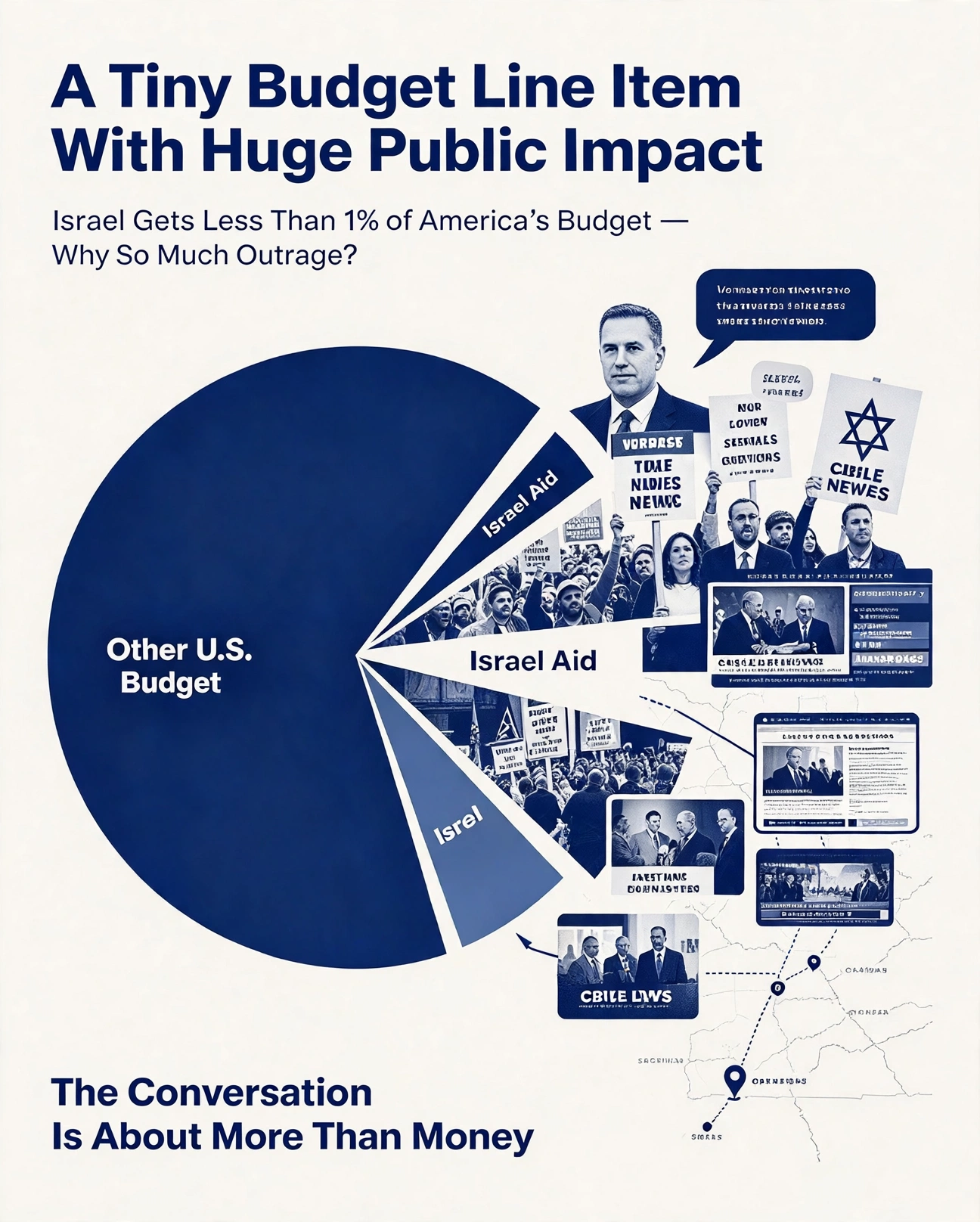
At first glance, the figures seem simple. U.S. federal spending in 2026 is projected at about $7.2 trillion, while annual aid to Israel is around $3.8 billion—less than 0.06% of the federal budget and roughly 1% of all U.S. foreign aid. Yet few issues in American public life spark such intense debate. Why does such a small budget item draw so much attention? The answer goes beyond dollars. It touches on values, history, identity, and the direction of American foreign policy.

The Numbers in Perspective

For perspective, the United States spends more each year on pet food than it provides in aid to Israel. Annual military assistance to Israel is roughly equivalent to one day of federal spending. Compared with outlays for Social Security, Medicare, defence, education, or interest on the national debt, it is a small sum. Yet public debate often treats it as a defining issue in U.S. foreign policy. That gap suggests the debate is less about the cost than the relationship’s consequences, symbolism, and moral significance.

Why Supporters Defend It So Passionately

For many Americans, support for Israel reflects shared values, strategic interests, and moral conviction. They view it as a dependable U.S. ally in a volatile region: a stable democracy with common security concerns and a history of partnership through decades of change. Supporters argue that the relationship strengthens American influence, intelligence cooperation, and technological progress in the Middle East. Many also feel a historical and ethical responsibility to help protect a country established in the aftermath of the Holocaust. To them, aid is not simply financial assistance; it is a way of standing with an ally they see as vulnerable in a dangerous region.

Why Critics Question It Just As Strongly

Critics raise serious concerns, and their objections are rarely about the dollar amount alone. They argue that unconditional military aid can undermine America’s moral standing, citing human rights concerns, settlement expansion, and civilian casualties in conflict zones. They question whether U.S. taxpayers should fund policies they oppose. Some also see the relationship as unbalanced, arguing that American interests are not always prioritized and that aid can limit Washington’s role as an impartial broker. Among younger generations, these concerns are influencing public opinion, with surveys indicating greater scepticism about the terms of the partnership—even among people who do not support ending it altogether.

The Media and Cultural Amplification

The debate can seem larger because the issue receives exceptional attention. The Israeli–Palestinian conflict is among the most closely followed and emotionally charged stories in global media. Developments in Gaza, Jerusalem, or Washington are quickly discussed across social media, cable news, and public forums. Because the conflict is tied to identity, faith, and justice, many people feel strongly about it. That creates a cycle: intense public interest drives more coverage, which keeps the issue at the center of discussion. A foreign policy debate can then spill into domestic politics, campus conversations, and divisions within communities.

The Bigger Picture: What the Debate Really Says

Ultimately, the outrage reflects something much bigger than a line in the budget. It raises questions about what America believes its role in the world should be. Should the United States support allies without reservation, even when their actions are disputed? Should taxpayer-funded aid carry conditions? And how should the country balance national interests, moral leadership, and international responsibility? These are difficult questions without easy answers.

The budget share alone says little about the issue’s significance. A small fraction of federal spending can still have a major effect on American values, foreign relations, and global standing. Until those deeper questions are resolved, the debate is likely to continue—not because of the cost, but because of what the relationship represents.

Tags:
XARLIN DESK

Israel Receives Less Than 1% of America’s Budget — Why Does It Spark So Much Outrage?

Update Time : 07:50:33 am, Friday, 13 November 2026

At first glance, the figures seem simple. U.S. federal spending in 2026 is projected at about $7.2 trillion, while annual aid to Israel is around $3.8 billion—less than 0.06% of the federal budget and roughly 1% of all U.S. foreign aid. Yet few issues in American public life spark such intense debate. Why does such a small budget item draw so much attention? The answer goes beyond dollars. It touches on values, history, identity, and the direction of American foreign policy.

The Numbers in Perspective

For perspective, the United States spends more each year on pet food than it provides in aid to Israel. Annual military assistance to Israel is roughly equivalent to one day of federal spending. Compared with outlays for Social Security, Medicare, defence, education, or interest on the national debt, it is a small sum. Yet public debate often treats it as a defining issue in U.S. foreign policy. That gap suggests the debate is less about the cost than the relationship’s consequences, symbolism, and moral significance.

Why Supporters Defend It So Passionately

For many Americans, support for Israel reflects shared values, strategic interests, and moral conviction. They view it as a dependable U.S. ally in a volatile region: a stable democracy with common security concerns and a history of partnership through decades of change. Supporters argue that the relationship strengthens American influence, intelligence cooperation, and technological progress in the Middle East. Many also feel a historical and ethical responsibility to help protect a country established in the aftermath of the Holocaust. To them, aid is not simply financial assistance; it is a way of standing with an ally they see as vulnerable in a dangerous region.

Why Critics Question It Just As Strongly

Critics raise serious concerns, and their objections are rarely about the dollar amount alone. They argue that unconditional military aid can undermine America’s moral standing, citing human rights concerns, settlement expansion, and civilian casualties in conflict zones. They question whether U.S. taxpayers should fund policies they oppose. Some also see the relationship as unbalanced, arguing that American interests are not always prioritized and that aid can limit Washington’s role as an impartial broker. Among younger generations, these concerns are influencing public opinion, with surveys indicating greater scepticism about the terms of the partnership—even among people who do not support ending it altogether.

The Media and Cultural Amplification

The debate can seem larger because the issue receives exceptional attention. The Israeli–Palestinian conflict is among the most closely followed and emotionally charged stories in global media. Developments in Gaza, Jerusalem, or Washington are quickly discussed across social media, cable news, and public forums. Because the conflict is tied to identity, faith, and justice, many people feel strongly about it. That creates a cycle: intense public interest drives more coverage, which keeps the issue at the center of discussion. A foreign policy debate can then spill into domestic politics, campus conversations, and divisions within communities.

The Bigger Picture: What the Debate Really Says

Ultimately, the outrage reflects something much bigger than a line in the budget. It raises questions about what America believes its role in the world should be. Should the United States support allies without reservation, even when their actions are disputed? Should taxpayer-funded aid carry conditions? And how should the country balance national interests, moral leadership, and international responsibility? These are difficult questions without easy answers.

The budget share alone says little about the issue’s significance. A small fraction of federal spending can still have a major effect on American values, foreign relations, and global standing. Until those deeper questions are resolved, the debate is likely to continue—not because of the cost, but because of what the relationship represents.