Singapore 3:19 am, Wednesday, 25 November 2026

Lufthansa to Cut 1,000 Jobs in Germany as Financial Pressure Mounts

  • Update Time : 03:50:32 pm, Friday, 20 November 2026
  • / 21 View

Lufthansa Plans to Cut 1,000 Jobs in Germany as Financial Pressure Mounts

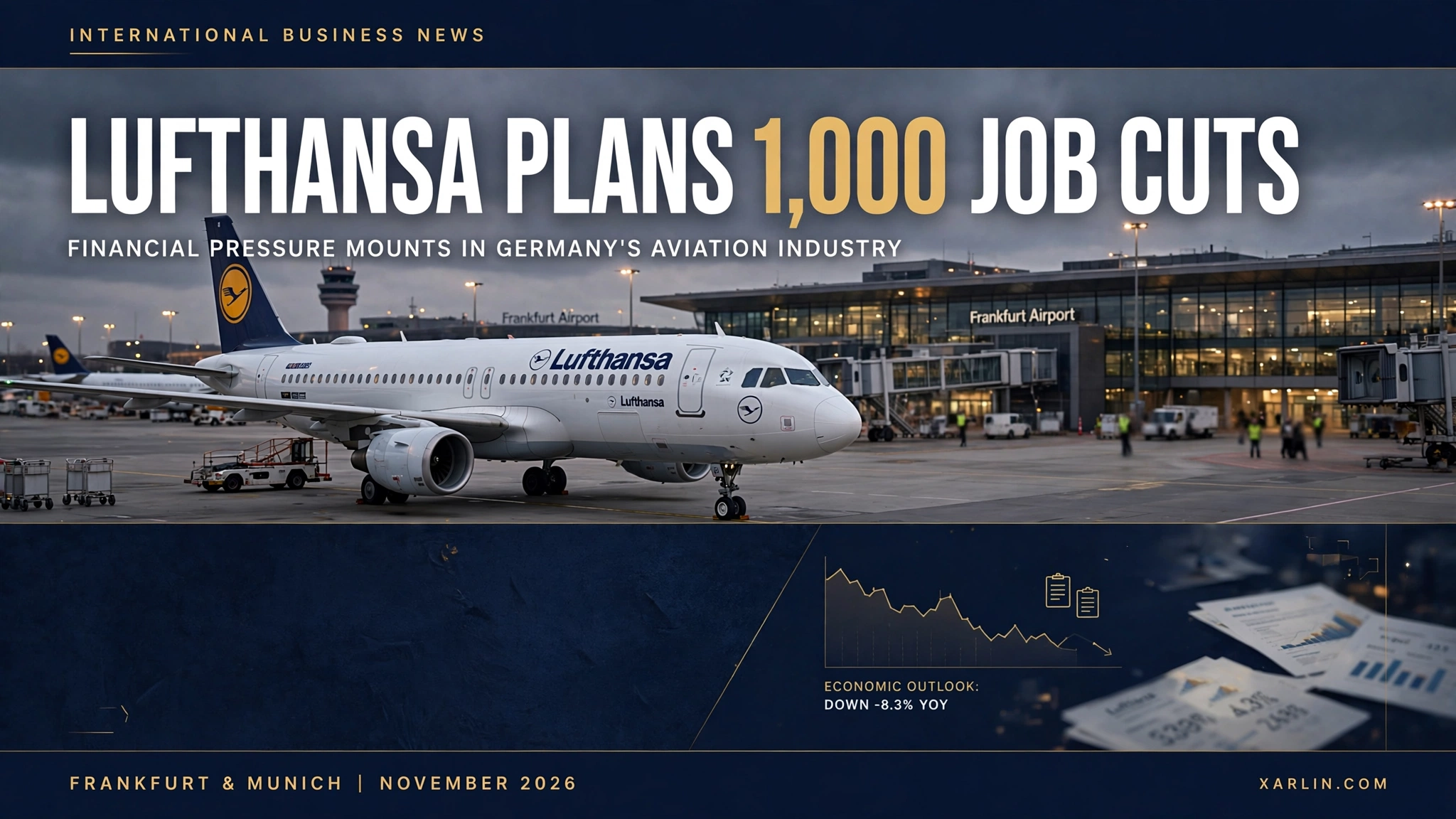
FRANKFURT, Germany – November 20, 2026 – German airline giant Lufthansa plans to eliminate approximately 1,000 full-time positions at its major Frankfurt and Munich hubs as the company faces growing financial pressure from rising fuel costs, operational disruptions and continued losses in its core airline business.

The planned workforce reduction represents another significant development in Europe’s aviation industry, where airlines are facing increasing pressure to control expenses while maintaining services and competing in an increasingly challenging international market.

According to an internal letter sent to employees and reported by several German and international news organisations, Lufthansa’s management believes its existing financial recovery programme is no longer sufficient to address the airline’s difficulties.

The announcement comes after the company’s core airline business recorded an operating loss of approximately €180 million during the first nine months of 2026.

The latest development raises questions about employment conditions, airline competitiveness and the future of Germany‘s aviation sector.

Lufthansa Plans 1,000 Job Cuts in Frankfurt and Munich

Lufthansa intends to reduce approximately 1,000 full-time positions across its Frankfurt and Munich operations.

The planned reductions affect Lufthansa Airlines, the group’s flagship passenger airline, rather than necessarily representing a reduction across every company within the wider Lufthansa Group.

The 1,000 positions represent approximately 2.5% of the airline’s workforce of around 40,000 employees.

However, the company has not yet provided a detailed timeline explaining when the reductions will take place or which departments and positions will be affected.

It also remains unclear whether these additional reductions are included in Lufthansa Group’s previously announced plan to eliminate approximately 4,000 administrative positions by 2030.

This uncertainty is particularly important for employees because the latest announcement could represent either an acceleration of existing restructuring plans or an additional workforce reduction.

Lufthansa has not provided further details beyond the statements communicated to employees.

Why Is Lufthansa Facing Financial Pressure?

Several factors are contributing to Lufthansa’s financial difficulties.

Among the most significant challenges are higher aviation fuel costs, employee strikes, operational expenses and increasing competition across international airline markets.

According to the internal management letter reported by German and international media, Lufthansa’s core airline business lost an average of approximately €20 million every month between January and September 2026.

The airline recorded an operating loss of around €180 million during those nine months.

Management identified several factors contributing to the situation, including the conflict in the Middle East, elevated fuel prices and nine days of strike action.

These developments have increased operating expenses and complicated the airline’s efforts to improve profitability.

The situation demonstrates how international political developments and rising energy costs can affect businesses operating in industries that depend heavily on fuel and global transportation networks.

Rising Fuel Prices Add Pressure to Airline Operations

Fuel is one of the largest operating expenses for commercial airlines.

When jet fuel prices increase, airlines must spend more money operating aircraft, particularly on routes involving long distances and frequent flights.

Lufthansa expects its fuel expenditure to reach approximately €9.3 billion in 2026, around €2 billion more than in 2025.

The increased expense has created additional pressure on the company’s financial recovery efforts.

The airline has already taken steps to reduce fuel consumption by cancelling approximately 20,000 short-haul flights through October.

However, reducing flight capacity also creates challenges.

Fewer flights can affect passenger connections, aircraft utilisation and revenue opportunities, particularly at major international airports.

For Lufthansa, finding the right balance between controlling costs and maintaining its competitive position remains a major challenge.

Employee Strikes Create Additional Challenges

Labour disputes have also contributed to the airline’s difficulties.

Lufthansa experienced nine days of strike action during the first nine months of 2026, according to reports based on the management letter.

Industrial disputes can disrupt flight schedules, increase operational expenses and affect passenger confidence.

The airline has also faced disagreements with employee representatives over working conditions, salaries and retirement arrangements.

These issues are particularly significant for a major international airline because maintaining reliable operations depends on cooperation between pilots, cabin crew, airport employees and management.

Lufthansa has been working to resolve labour disagreements while attempting to improve productivity and reduce operating expenses.

However, the latest job-cut announcement could create additional tension between management and employees.

Lufthansa’s Financial Recovery Programme Faces New Challenges

Lufthansa launched a major turnaround programme in 2024 to improve profitability and strengthen its competitive position.

The programme included more than 700 individual measures designed to generate approximately €2.5 billion in additional earnings by 2028.

However, management now believes the measures announced so far are insufficient to address the airline’s current financial situation.

The latest workforce reduction proposal indicates that Lufthansa may need to accelerate its restructuring efforts.

The company is also considering further adjustments to short-haul and medium-haul operations.

These measures could involve reducing aircraft capacity and reviewing the airline’s operational structure.

The broader objective is to improve efficiency, reduce expenses and create a more sustainable business model.

Lufthansa Group Reports Stronger Profits Despite Problems at Its Core Airline

Interestingly, Lufthansa’s financial challenges are not shared equally across its entire corporate group.

The wider Lufthansa Group reported an operating profit of approximately €1.4 billion in the third quarter of 2026, representing a 6% increase compared with the same period last year.

Its net profit also increased by approximately 30% to €1.26 billion.

Strong demand for premium long-haul travel helped support the group’s financial performance.

Lufthansa Group also owns several other European airline businesses, including SWISS, Austrian Airlines and Brussels Airlines.

However, the performance of the wider group does not eliminate the difficulties facing its flagship Lufthansa Airlines business.

The core airline’s third-quarter operating profit fell by approximately one-third to €300 million.

The contrast highlights an important issue for the company: some parts of its international airline portfolio are performing better financially than its main German airline operation.

Lufthansa also reduced its full-year operating profit outlook in November, forecasting a range of approximately €1.7 billion to €2 billion.

What Could the Job Cuts Mean for Germany’s Aviation Industry?

Lufthansa is an important part of Germany’s transportation infrastructure and economy.

Its major operations at Frankfurt Airport and Munich Airport connect Germany with international business centres, tourist destinations and important global markets.

Consequently, significant employment reductions could have implications beyond the airline itself.

Workers, airport-related businesses and companies providing services to the aviation industry may be affected by changes in Lufthansa’s operations.

The announcement also reflects broader challenges facing European aviation companies.

Airlines must manage fluctuating energy prices, labour costs, environmental requirements and competition from international carriers.

At the same time, passengers increasingly expect affordable tickets, reliable services and convenient international connections.

Balancing these expectations while maintaining profitability is becoming increasingly difficult for some established airlines.

What Happens Next for Lufthansa Employees and Passengers?

The immediate priority for Lufthansa will be determining how the planned workforce reductions will be implemented.

Employees are waiting for further information about the positions affected, the timetable and whether the changes will be connected to existing restructuring programmes.

The company is also expected to continue reviewing its operational structure and financial performance.

For passengers, the announcement does not automatically mean that all Lufthansa services will be reduced or that widespread flight cancellations are planned.

However, further adjustments to short-haul and medium-haul capacity could influence the airline’s future route network.

Passengers should continue checking official airline announcements for information about individual flights and travel arrangements.

Outlook: A Difficult Period for Europe’s Airline Industry

Lufthansa’s decision to plan approximately 1,000 job reductions illustrates the financial pressures confronting major airlines in 2026.

Although international travel demand remains an important source of revenue, higher fuel expenses, industrial disputes and operational challenges can significantly affect airline profitability.

For Lufthansa, the coming months will be important as management attempts to restore the financial performance of its core airline while maintaining its position in the international aviation market.

The outcome of the restructuring programme could also provide a wider indication of how established European airlines respond to changing economic conditions.

For employees and passengers, attention will now turn to the company’s next decisions and whether its efforts to improve efficiency can deliver a more stable financial future.

source: Euronews

XARLIN DESK

Lufthansa to Cut 1,000 Jobs in Germany as Financial Pressure Mounts

Update Time : 03:50:32 pm, Friday, 20 November 2026

Lufthansa Plans to Cut 1,000 Jobs in Germany as Financial Pressure Mounts

FRANKFURT, Germany – November 20, 2026 – German airline giant Lufthansa plans to eliminate approximately 1,000 full-time positions at its major Frankfurt and Munich hubs as the company faces growing financial pressure from rising fuel costs, operational disruptions and continued losses in its core airline business.

The planned workforce reduction represents another significant development in Europe’s aviation industry, where airlines are facing increasing pressure to control expenses while maintaining services and competing in an increasingly challenging international market.

According to an internal letter sent to employees and reported by several German and international news organisations, Lufthansa’s management believes its existing financial recovery programme is no longer sufficient to address the airline’s difficulties.

The announcement comes after the company’s core airline business recorded an operating loss of approximately €180 million during the first nine months of 2026.

The latest development raises questions about employment conditions, airline competitiveness and the future of Germany‘s aviation sector.

Lufthansa Plans 1,000 Job Cuts in Frankfurt and Munich

Lufthansa intends to reduce approximately 1,000 full-time positions across its Frankfurt and Munich operations.

The planned reductions affect Lufthansa Airlines, the group’s flagship passenger airline, rather than necessarily representing a reduction across every company within the wider Lufthansa Group.

The 1,000 positions represent approximately 2.5% of the airline’s workforce of around 40,000 employees.

However, the company has not yet provided a detailed timeline explaining when the reductions will take place or which departments and positions will be affected.

It also remains unclear whether these additional reductions are included in Lufthansa Group’s previously announced plan to eliminate approximately 4,000 administrative positions by 2030.

This uncertainty is particularly important for employees because the latest announcement could represent either an acceleration of existing restructuring plans or an additional workforce reduction.

Lufthansa has not provided further details beyond the statements communicated to employees.

Why Is Lufthansa Facing Financial Pressure?

Several factors are contributing to Lufthansa’s financial difficulties.

Among the most significant challenges are higher aviation fuel costs, employee strikes, operational expenses and increasing competition across international airline markets.

According to the internal management letter reported by German and international media, Lufthansa’s core airline business lost an average of approximately €20 million every month between January and September 2026.

The airline recorded an operating loss of around €180 million during those nine months.

Management identified several factors contributing to the situation, including the conflict in the Middle East, elevated fuel prices and nine days of strike action.

These developments have increased operating expenses and complicated the airline’s efforts to improve profitability.

The situation demonstrates how international political developments and rising energy costs can affect businesses operating in industries that depend heavily on fuel and global transportation networks.

Rising Fuel Prices Add Pressure to Airline Operations

Fuel is one of the largest operating expenses for commercial airlines.

When jet fuel prices increase, airlines must spend more money operating aircraft, particularly on routes involving long distances and frequent flights.

Lufthansa expects its fuel expenditure to reach approximately €9.3 billion in 2026, around €2 billion more than in 2025.

The increased expense has created additional pressure on the company’s financial recovery efforts.

The airline has already taken steps to reduce fuel consumption by cancelling approximately 20,000 short-haul flights through October.

However, reducing flight capacity also creates challenges.

Fewer flights can affect passenger connections, aircraft utilisation and revenue opportunities, particularly at major international airports.

For Lufthansa, finding the right balance between controlling costs and maintaining its competitive position remains a major challenge.

Employee Strikes Create Additional Challenges

Labour disputes have also contributed to the airline’s difficulties.

Lufthansa experienced nine days of strike action during the first nine months of 2026, according to reports based on the management letter.

Industrial disputes can disrupt flight schedules, increase operational expenses and affect passenger confidence.

The airline has also faced disagreements with employee representatives over working conditions, salaries and retirement arrangements.

These issues are particularly significant for a major international airline because maintaining reliable operations depends on cooperation between pilots, cabin crew, airport employees and management.

Lufthansa has been working to resolve labour disagreements while attempting to improve productivity and reduce operating expenses.

However, the latest job-cut announcement could create additional tension between management and employees.

Lufthansa’s Financial Recovery Programme Faces New Challenges

Lufthansa launched a major turnaround programme in 2024 to improve profitability and strengthen its competitive position.

The programme included more than 700 individual measures designed to generate approximately €2.5 billion in additional earnings by 2028.

However, management now believes the measures announced so far are insufficient to address the airline’s current financial situation.

The latest workforce reduction proposal indicates that Lufthansa may need to accelerate its restructuring efforts.

The company is also considering further adjustments to short-haul and medium-haul operations.

These measures could involve reducing aircraft capacity and reviewing the airline’s operational structure.

The broader objective is to improve efficiency, reduce expenses and create a more sustainable business model.

Lufthansa Group Reports Stronger Profits Despite Problems at Its Core Airline

Interestingly, Lufthansa’s financial challenges are not shared equally across its entire corporate group.

The wider Lufthansa Group reported an operating profit of approximately €1.4 billion in the third quarter of 2026, representing a 6% increase compared with the same period last year.

Its net profit also increased by approximately 30% to €1.26 billion.

Strong demand for premium long-haul travel helped support the group’s financial performance.

Lufthansa Group also owns several other European airline businesses, including SWISS, Austrian Airlines and Brussels Airlines.

However, the performance of the wider group does not eliminate the difficulties facing its flagship Lufthansa Airlines business.

The core airline’s third-quarter operating profit fell by approximately one-third to €300 million.

The contrast highlights an important issue for the company: some parts of its international airline portfolio are performing better financially than its main German airline operation.

Lufthansa also reduced its full-year operating profit outlook in November, forecasting a range of approximately €1.7 billion to €2 billion.

What Could the Job Cuts Mean for Germany’s Aviation Industry?

Lufthansa is an important part of Germany’s transportation infrastructure and economy.

Its major operations at Frankfurt Airport and Munich Airport connect Germany with international business centres, tourist destinations and important global markets.

Consequently, significant employment reductions could have implications beyond the airline itself.

Workers, airport-related businesses and companies providing services to the aviation industry may be affected by changes in Lufthansa’s operations.

The announcement also reflects broader challenges facing European aviation companies.

Airlines must manage fluctuating energy prices, labour costs, environmental requirements and competition from international carriers.

At the same time, passengers increasingly expect affordable tickets, reliable services and convenient international connections.

Balancing these expectations while maintaining profitability is becoming increasingly difficult for some established airlines.

What Happens Next for Lufthansa Employees and Passengers?

The immediate priority for Lufthansa will be determining how the planned workforce reductions will be implemented.

Employees are waiting for further information about the positions affected, the timetable and whether the changes will be connected to existing restructuring programmes.

The company is also expected to continue reviewing its operational structure and financial performance.

For passengers, the announcement does not automatically mean that all Lufthansa services will be reduced or that widespread flight cancellations are planned.

However, further adjustments to short-haul and medium-haul capacity could influence the airline’s future route network.

Passengers should continue checking official airline announcements for information about individual flights and travel arrangements.

Outlook: A Difficult Period for Europe’s Airline Industry

Lufthansa’s decision to plan approximately 1,000 job reductions illustrates the financial pressures confronting major airlines in 2026.

Although international travel demand remains an important source of revenue, higher fuel expenses, industrial disputes and operational challenges can significantly affect airline profitability.

For Lufthansa, the coming months will be important as management attempts to restore the financial performance of its core airline while maintaining its position in the international aviation market.

The outcome of the restructuring programme could also provide a wider indication of how established European airlines respond to changing economic conditions.

For employees and passengers, attention will now turn to the company’s next decisions and whether its efforts to improve efficiency can deliver a more stable financial future.

source: Euronews