Singapore 12:18 pm, Wednesday, 25 November 2026

US-China Trade Relations: Can Trump and Xi Reshape Global Trade in 2026?

  • Update Time : 03:19:37 pm, Wednesday, 18 November 2026
  • / 17 View

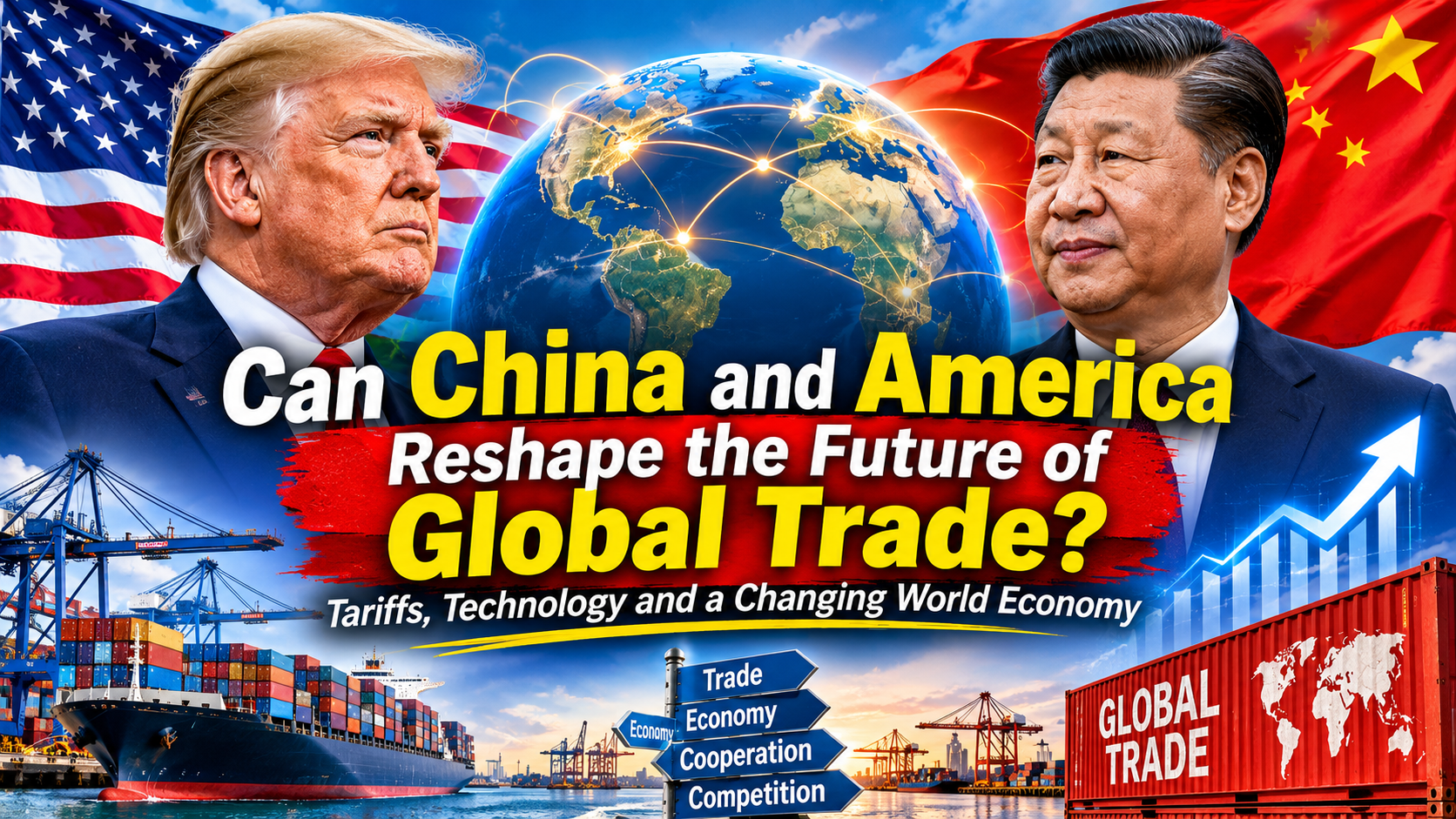
Can China and America Reshape the Future of Global Trade? Trump and Xi Face Crucial Economic Talks


The economic relationship between the United States and China is entering another critical moment as President Donald Trump and Chinese President Xi Jinping prepare for high-level discussions in Shenzhen, China. Their meeting comes at a time when tariffs, technology restrictions, rare earth minerals and agricultural trade are creating uncertainty across the global economy.

As the world’s two largest economies, the United States and China have enormous influence over international manufacturing, investment, technology and supply chains. Decisions made in Washington and Beijing can affect businesses, consumers and governments far beyond their borders.

The upcoming talks, scheduled alongside the Asia-Pacific Economic Cooperation (APEC) summit, are expected to focus on managing economic tensions and maintaining a fragile trade agreement.

However, the central question remains: Can the two economic powers move beyond their trade rivalry and establish a more stable relationship that benefits the global economy?

Why Are the United States and China Important to Global Trade?

The United States and China occupy central positions in the international trading system, although their economic strengths differ.

The United States is one of the world’s largest consumer markets, with significant influence in financial services, advanced technology, agriculture and international investment.

China, meanwhile, has developed into a manufacturing powerhouse, producing everything from electronics and machinery to electric vehicles, batteries, industrial equipment and consumer products.

Their economic relationship connects thousands of companies and millions of workers across international supply chains.

American businesses depend on Chinese manufacturing and materials for various products, while Chinese manufacturers rely on international markets, including the United States, to sell their goods.

This interdependence makes a prolonged trade conflict particularly complicated.

When Washington increases tariffs on Chinese products or Beijing introduces restrictions on important exports, the consequences can extend into other countries.

For this reason, the Trump-Xi discussions are attracting attention from governments, investors and international businesses.

Trump and Xi Prepare for Another Important Trade Discussion

President Donald Trump arrived in China on November 18 ahead of a planned meeting with Xi Jinping on the sidelines of the APEC summit in Shenzhen.

The two leaders are expected to discuss trade disagreements, economic cooperation and outstanding commitments under their existing trade arrangements.

Their relationship has experienced several periods of confrontation and diplomatic engagement.

In 2025, escalating tariffs pushed the trade conflict to extraordinary levels before both governments agreed to reduce tensions through negotiations.

A trade truce reached in October 2025 helped lower some tariff pressures and created opportunities for further discussions.

However, the agreement has not resolved the deeper disagreements between the two countries.

According to Reuters, the latest extension keeps important elements of the trade truce in place until January 10, 2027.

That deadline makes the upcoming discussions particularly important.

Both governments have reasons to avoid another major escalation, but reaching a lasting agreement will require progress on several difficult economic issues.

Tariffs Remain a Major Obstacle

Tariffs are among the biggest disagreements between Washington and Beijing.

A tariff is a tax imposed on imported goods. Governments sometimes use tariffs to protect domestic industries, respond to trade disputes or encourage companies to manufacture products locally.

However, tariffs can also increase costs for importers, businesses and consumers.

During the recent US-China trade conflict, both countries introduced additional duties on each other’s products.

Although the two governments later reduced some trade restrictions, important disagreements remain.

Reuters reported on November 14 that Chinese and American officials discussed a proposed reciprocal tariff-reduction arrangement involving $30 billion in goods from each country.

The discussions covered agricultural products and other trade issues, but no final agreement was announced.

The difference between an announced proposal and an implemented agreement is important. Businesses need predictable rules, not simply promises made during diplomatic meetings.

If Washington and Beijing successfully reduce tariffs on additional products, companies could benefit from lower costs and improved market access.

If negotiations fail, businesses may face another period of uncertainty.

Rare Earth Minerals: China’s Strategic Economic Advantage

One of the most important issues in the US-China relationship is access to rare earth minerals and other critical materials.

These resources are essential for producing advanced electronics, electric vehicles, renewable energy equipment, defence systems and industrial technologies.

China occupies a particularly important position in the global rare earth supply chain, especially in processing and refining.

This gives Beijing considerable influence over industries that depend on reliable supplies of these materials.

Washington has been concerned about its dependence on Chinese-controlled supply chains and has increasingly explored alternative sources.

At the same time, China’s export restrictions have become an important part of its economic negotiating position.

According to reporting by The Washington Post on November 18, shipments of rare earth materials to the United States remained significantly below pre-trade-war levels.

The disagreement demonstrates that modern trade competition is not simply about selling products. It is also about controlling access to the resources required to build future industries.

For countries such as Australia, Canada and several African nations, the situation could create opportunities to develop alternative mineral supply chains.

However, establishing new mines, processing facilities and international supply agreements takes considerable time and investment.

Technology Competition Could Shape the Next Phase of Global Trade

Beyond traditional manufacturing and agriculture, technology is becoming one of the most important areas of competition between the United States and China.

Artificial intelligence, advanced semiconductors, robotics, telecommunications and electric vehicles are increasingly connected to economic security.

The United States has introduced restrictions affecting China’s access to certain advanced semiconductor technologies.

Washington argues that controls on sensitive technology are necessary to protect national security.

Beijing, however, has criticised American restrictions and argues that they limit China’s technological development.

This disagreement creates challenges for international technology companies.

Businesses operating across borders must consider export regulations, investment restrictions and changing supply-chain requirements.

Artificial intelligence is another area where both countries are competing for technological leadership.

Although the two governments have discussed establishing communication channels for AI-related safety incidents, significant differences remain over technology access and development.

The outcome of these discussions could influence the future direction of global technology investment.

How Could Other Countries Be Affected?

The economic rivalry between Washington and Beijing is not limited to their domestic markets.

Countries around the world are closely connected to Chinese manufacturing, American investment and international trade networks.

Any major change in US-China trade policy could create both opportunities and challenges.

Australia

Australia is an important supplier of minerals, energy resources and agricultural products.

As countries seek to diversify their supply chains, Australian producers could benefit from increased demand for critical minerals and alternative suppliers.

However, Australia also has substantial economic ties with China, making stable trade relations particularly important.

Canada

Canada maintains strong economic connections with the United States while also trading with China.

Changes in tariffs, manufacturing investment and critical mineral demand could affect Canadian businesses.

The country may also benefit from international efforts to diversify supplies of essential resources.

European Union

European economies depend on international manufacturing networks and access to major consumer markets.

A renewed US-China trade conflict could affect European exporters, automotive manufacturers, technology companies and industrial suppliers.

European governments may also face pressure to balance their economic relationships with Washington and Beijing.

Southeast Asia

Countries such as Vietnam, Malaysia, Indonesia, Thailand and Singapore are important parts of international manufacturing and logistics networks.

Companies seeking alternatives to China-based production have increasingly considered Southeast Asian markets.

However, these countries also depend on trade with both the United States and China.

A more stable relationship between the two powers could support regional investment, while another trade dispute could create additional uncertainty.

Could the World Face Another Trade War?

Despite diplomatic efforts, the possibility of renewed trade tensions cannot be dismissed.

One important warning sign emerged on November 17, when US Democratic Senator Tammy Baldwin introduced legislation seeking to revoke China’s permanent normal trade relations status.

The proposal reflects continuing political disagreements in Washington over China’s economic policies.

It also demonstrates that trade relations are influenced by domestic politics, not only negotiations between presidents.

According to Reuters, revoking China’s existing trade status could lead to higher import costs and affect American consumers and businesses.

Even if the proposed legislation does not become law, its introduction highlights the political challenges surrounding US-China economic relations.

The two governments must therefore manage not only their economic differences but also domestic political pressure.

What Should Businesses and Investors Watch Next?

For international businesses, the most important issue is whether the upcoming discussions produce practical and measurable results.

Several developments deserve particular attention:

1. Tariff reductions: Businesses will be watching for progress on proposed reductions affecting selected products traded between the two countries.

2. Agricultural purchases: American farmers are interested in whether China fulfils its commitments to purchase US agricultural products.

3. Rare earth supplies: Manufacturers need reliable access to critical minerals and other essential materials.

4. Semiconductor restrictions: Technology companies will be watching for any changes to export controls affecting advanced computer chips.

5. Trade agreement deadline: The January 10, 2027 deadline will be an important test of whether the current trade truce can be extended or replaced with a broader agreement.

These developments could influence investment decisions, manufacturing strategies and international supply chains over the coming months.

Conclusion: The Future of Global Trade Depends on More Than Two Leaders

The United States and China have the economic influence to reshape important parts of the international trading system.

However, creating a stable global trading environment will require more than diplomatic meetings and temporary agreements.

Both governments must address difficult questions involving tariffs, technology access, critical minerals, market competition and economic security.

Other countries will also play an important role as businesses diversify supply chains and governments reconsider their economic partnerships.

The upcoming Trump-Xi discussions represent another opportunity to reduce tensions, but a lasting agreement remains uncertain.

Ultimately, the future of global trade will depend on whether the world’s two largest economies can manage their differences without creating greater economic uncertainty for everyone else.

For millions of workers, businesses and consumers around the world, the outcome matters far beyond Washington and Beijing.

sources: Reuters: China and US discuss tariffs and agricultural trade, Al Jazeera: Low expectations for breakthroughs in Trump-Xi talks

Associated Press: Trump, Xi and Putin plan unprecedented joint meeting

XARLIN DESK

US-China Trade Relations: Can Trump and Xi Reshape Global Trade in 2026?

Update Time : 03:19:37 pm, Wednesday, 18 November 2026

Can China and America Reshape the Future of Global Trade? Trump and Xi Face Crucial Economic Talks


The economic relationship between the United States and China is entering another critical moment as President Donald Trump and Chinese President Xi Jinping prepare for high-level discussions in Shenzhen, China. Their meeting comes at a time when tariffs, technology restrictions, rare earth minerals and agricultural trade are creating uncertainty across the global economy.

As the world’s two largest economies, the United States and China have enormous influence over international manufacturing, investment, technology and supply chains. Decisions made in Washington and Beijing can affect businesses, consumers and governments far beyond their borders.

The upcoming talks, scheduled alongside the Asia-Pacific Economic Cooperation (APEC) summit, are expected to focus on managing economic tensions and maintaining a fragile trade agreement.

However, the central question remains: Can the two economic powers move beyond their trade rivalry and establish a more stable relationship that benefits the global economy?

Why Are the United States and China Important to Global Trade?

The United States and China occupy central positions in the international trading system, although their economic strengths differ.

The United States is one of the world’s largest consumer markets, with significant influence in financial services, advanced technology, agriculture and international investment.

China, meanwhile, has developed into a manufacturing powerhouse, producing everything from electronics and machinery to electric vehicles, batteries, industrial equipment and consumer products.

Their economic relationship connects thousands of companies and millions of workers across international supply chains.

American businesses depend on Chinese manufacturing and materials for various products, while Chinese manufacturers rely on international markets, including the United States, to sell their goods.

This interdependence makes a prolonged trade conflict particularly complicated.

When Washington increases tariffs on Chinese products or Beijing introduces restrictions on important exports, the consequences can extend into other countries.

For this reason, the Trump-Xi discussions are attracting attention from governments, investors and international businesses.

Trump and Xi Prepare for Another Important Trade Discussion

President Donald Trump arrived in China on November 18 ahead of a planned meeting with Xi Jinping on the sidelines of the APEC summit in Shenzhen.

The two leaders are expected to discuss trade disagreements, economic cooperation and outstanding commitments under their existing trade arrangements.

Their relationship has experienced several periods of confrontation and diplomatic engagement.

In 2025, escalating tariffs pushed the trade conflict to extraordinary levels before both governments agreed to reduce tensions through negotiations.

A trade truce reached in October 2025 helped lower some tariff pressures and created opportunities for further discussions.

However, the agreement has not resolved the deeper disagreements between the two countries.

According to Reuters, the latest extension keeps important elements of the trade truce in place until January 10, 2027.

That deadline makes the upcoming discussions particularly important.

Both governments have reasons to avoid another major escalation, but reaching a lasting agreement will require progress on several difficult economic issues.

Tariffs Remain a Major Obstacle

Tariffs are among the biggest disagreements between Washington and Beijing.

A tariff is a tax imposed on imported goods. Governments sometimes use tariffs to protect domestic industries, respond to trade disputes or encourage companies to manufacture products locally.

However, tariffs can also increase costs for importers, businesses and consumers.

During the recent US-China trade conflict, both countries introduced additional duties on each other’s products.

Although the two governments later reduced some trade restrictions, important disagreements remain.

Reuters reported on November 14 that Chinese and American officials discussed a proposed reciprocal tariff-reduction arrangement involving $30 billion in goods from each country.

The discussions covered agricultural products and other trade issues, but no final agreement was announced.

The difference between an announced proposal and an implemented agreement is important. Businesses need predictable rules, not simply promises made during diplomatic meetings.

If Washington and Beijing successfully reduce tariffs on additional products, companies could benefit from lower costs and improved market access.

If negotiations fail, businesses may face another period of uncertainty.

Rare Earth Minerals: China’s Strategic Economic Advantage

One of the most important issues in the US-China relationship is access to rare earth minerals and other critical materials.

These resources are essential for producing advanced electronics, electric vehicles, renewable energy equipment, defence systems and industrial technologies.

China occupies a particularly important position in the global rare earth supply chain, especially in processing and refining.

This gives Beijing considerable influence over industries that depend on reliable supplies of these materials.

Washington has been concerned about its dependence on Chinese-controlled supply chains and has increasingly explored alternative sources.

At the same time, China’s export restrictions have become an important part of its economic negotiating position.

According to reporting by The Washington Post on November 18, shipments of rare earth materials to the United States remained significantly below pre-trade-war levels.

The disagreement demonstrates that modern trade competition is not simply about selling products. It is also about controlling access to the resources required to build future industries.

For countries such as Australia, Canada and several African nations, the situation could create opportunities to develop alternative mineral supply chains.

However, establishing new mines, processing facilities and international supply agreements takes considerable time and investment.

Technology Competition Could Shape the Next Phase of Global Trade

Beyond traditional manufacturing and agriculture, technology is becoming one of the most important areas of competition between the United States and China.

Artificial intelligence, advanced semiconductors, robotics, telecommunications and electric vehicles are increasingly connected to economic security.

The United States has introduced restrictions affecting China’s access to certain advanced semiconductor technologies.

Washington argues that controls on sensitive technology are necessary to protect national security.

Beijing, however, has criticised American restrictions and argues that they limit China’s technological development.

This disagreement creates challenges for international technology companies.

Businesses operating across borders must consider export regulations, investment restrictions and changing supply-chain requirements.

Artificial intelligence is another area where both countries are competing for technological leadership.

Although the two governments have discussed establishing communication channels for AI-related safety incidents, significant differences remain over technology access and development.

The outcome of these discussions could influence the future direction of global technology investment.

How Could Other Countries Be Affected?

The economic rivalry between Washington and Beijing is not limited to their domestic markets.

Countries around the world are closely connected to Chinese manufacturing, American investment and international trade networks.

Any major change in US-China trade policy could create both opportunities and challenges.

Australia

Australia is an important supplier of minerals, energy resources and agricultural products.

As countries seek to diversify their supply chains, Australian producers could benefit from increased demand for critical minerals and alternative suppliers.

However, Australia also has substantial economic ties with China, making stable trade relations particularly important.

Canada

Canada maintains strong economic connections with the United States while also trading with China.

Changes in tariffs, manufacturing investment and critical mineral demand could affect Canadian businesses.

The country may also benefit from international efforts to diversify supplies of essential resources.

European Union

European economies depend on international manufacturing networks and access to major consumer markets.

A renewed US-China trade conflict could affect European exporters, automotive manufacturers, technology companies and industrial suppliers.

European governments may also face pressure to balance their economic relationships with Washington and Beijing.

Southeast Asia

Countries such as Vietnam, Malaysia, Indonesia, Thailand and Singapore are important parts of international manufacturing and logistics networks.

Companies seeking alternatives to China-based production have increasingly considered Southeast Asian markets.

However, these countries also depend on trade with both the United States and China.

A more stable relationship between the two powers could support regional investment, while another trade dispute could create additional uncertainty.

Could the World Face Another Trade War?

Despite diplomatic efforts, the possibility of renewed trade tensions cannot be dismissed.

One important warning sign emerged on November 17, when US Democratic Senator Tammy Baldwin introduced legislation seeking to revoke China’s permanent normal trade relations status.

The proposal reflects continuing political disagreements in Washington over China’s economic policies.

It also demonstrates that trade relations are influenced by domestic politics, not only negotiations between presidents.

According to Reuters, revoking China’s existing trade status could lead to higher import costs and affect American consumers and businesses.

Even if the proposed legislation does not become law, its introduction highlights the political challenges surrounding US-China economic relations.

The two governments must therefore manage not only their economic differences but also domestic political pressure.

What Should Businesses and Investors Watch Next?

For international businesses, the most important issue is whether the upcoming discussions produce practical and measurable results.

Several developments deserve particular attention:

1. Tariff reductions: Businesses will be watching for progress on proposed reductions affecting selected products traded between the two countries.

2. Agricultural purchases: American farmers are interested in whether China fulfils its commitments to purchase US agricultural products.

3. Rare earth supplies: Manufacturers need reliable access to critical minerals and other essential materials.

4. Semiconductor restrictions: Technology companies will be watching for any changes to export controls affecting advanced computer chips.

5. Trade agreement deadline: The January 10, 2027 deadline will be an important test of whether the current trade truce can be extended or replaced with a broader agreement.

These developments could influence investment decisions, manufacturing strategies and international supply chains over the coming months.

Conclusion: The Future of Global Trade Depends on More Than Two Leaders

The United States and China have the economic influence to reshape important parts of the international trading system.

However, creating a stable global trading environment will require more than diplomatic meetings and temporary agreements.

Both governments must address difficult questions involving tariffs, technology access, critical minerals, market competition and economic security.

Other countries will also play an important role as businesses diversify supply chains and governments reconsider their economic partnerships.

The upcoming Trump-Xi discussions represent another opportunity to reduce tensions, but a lasting agreement remains uncertain.

Ultimately, the future of global trade will depend on whether the world’s two largest economies can manage their differences without creating greater economic uncertainty for everyone else.

For millions of workers, businesses and consumers around the world, the outcome matters far beyond Washington and Beijing.

sources: Reuters: China and US discuss tariffs and agricultural trade, Al Jazeera: Low expectations for breakthroughs in Trump-Xi talks

Associated Press: Trump, Xi and Putin plan unprecedented joint meeting