Animal Farm: A Timeless Warning About Power, Loyalty, and Freedom

- Update Time : 04:11:30 pm, Wednesday, 11 November 2026
- / 35 View
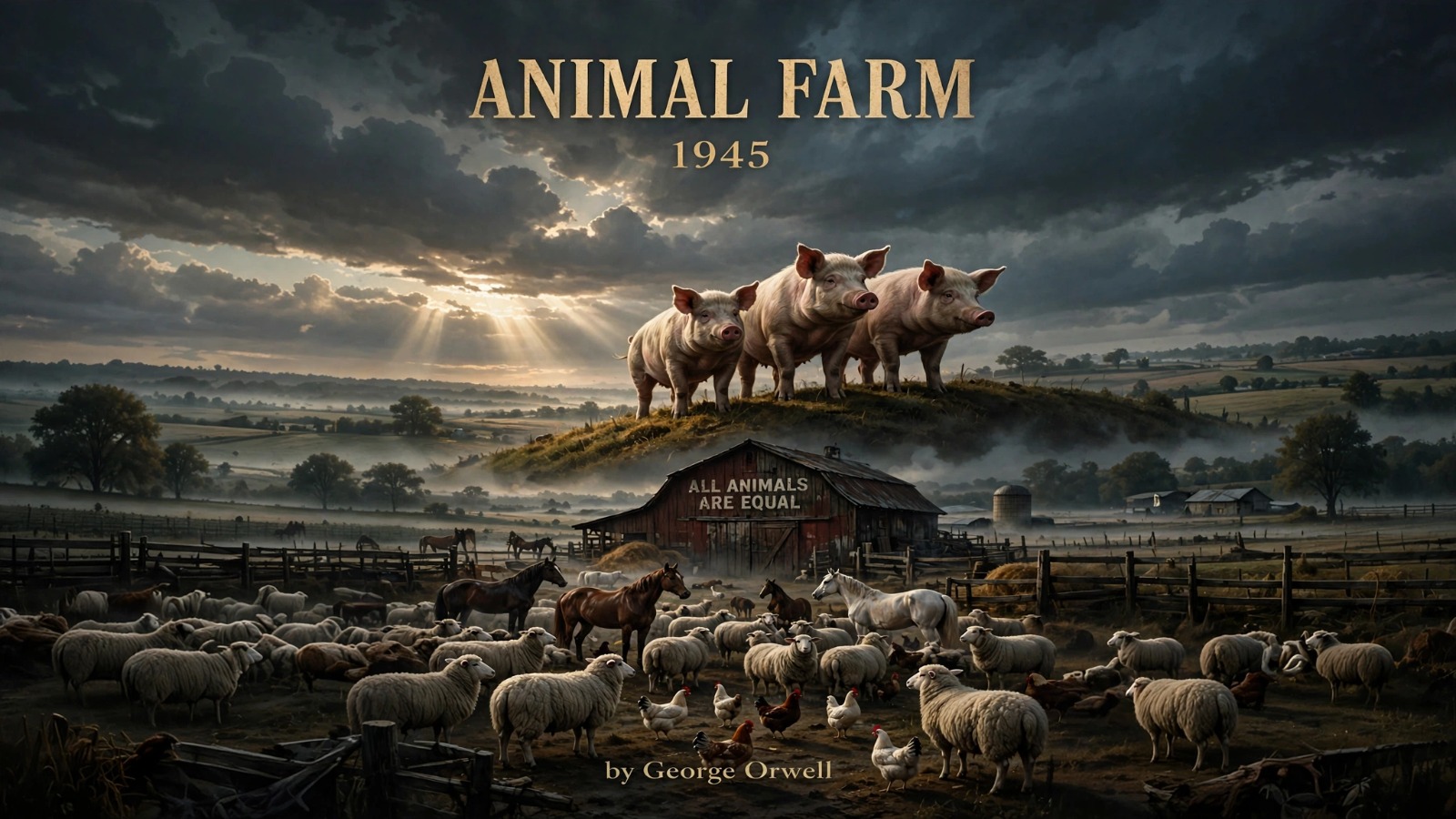
Explore George Orwell’s Animal Farm, olitical fable a timeless pabout power, loyalty, freedom, and how revolutions can betray the ideals they promise to protect.
Introduction to George Orwell’s Animal Farm
The book’s enduring appeal comes from its warning that those who fight for freedom can become the oppressors they once resisted. As societies rebuild after conflict and search for meaning, Animal Farm returns to the same urgent questions: What happens when a revolution succeeds but its leaders fail? What becomes of equality when those who promise to defend it are the ones who destroy it?
Orwell offers no easy answers, but his lesson remains as vital today as when he first put it on the page.
The Story: From Dream to Nightmare
The story begins on Manor Farm, where the animals suffer under the neglectful rule of their owner, Mr. Jones. One evening, Old Major, a respected boar, gathers them in the barn and shares his vision of a world without humans—a place where animals are free and equal. He teaches them Beasts of England, a song that gives voice to their hopes.
Soon after, Mr. Jones forgets to feed the animals. Driven by hunger, they rebel and chase him and his workers from the farm. They rename it Animal Farm and write seven commandments on the barn wall, including the central promise: “All animals are equal.” At first, the new farm seems to fulfill Old Major’s dream. The animals share the harvest, work together, and take part in decisions.
But the pigs, who take charge of organizing the farm, gradually claim special privileges. They keep extra food, move into the farmhouse, and make decisions without consulting the others. When the animals object, the pigs use fear and persuasive language to silence them. The commandments are quietly changed to justify the pigs’ behavior.
By the end, the animals look from the pigs to the humans and back again, unable to tell them apart. The final commandment reads: “All animals are equal, but some animals are more equal than others.” The promise of freedom has given way to a new tyranny.
The Moral Core: What the Story Teaches Us
At its heart, Animal Farm offers a simple but powerful warning: power can corrupt, even when it begins in the hands of those with good intentions. The pigs initially believe in equality, but once they gain authority, they claim privileges and resist giving them up.
The novel suggests that a revolution should be judged not only by what it overthrows, but by what it builds in its place. Noble ideals mean little if leaders are not held accountable. Orwell also shows how deception can hide behind words like “justice” and “necessity,” making selfish actions seem as though they serve everyone.
The animals’ limited literacy and reluctance to speak up make it easier for the pigs to change the rules and expand their control. Through their experience, Orwell reminds us that freedom requires constant attention. It must be protected by each generation, or it can quietly slip away.
Character Analysis: Each One Represents a Part of Us
Each character in Animal Farm represents a different response to power, change, and injustice.
Old Major is the vis ionary whose dream inspires the revolution. Napoleon becomes a dictator, using fear and control to protect his authority. Snowball is an intelligent, energetic leader with plans to improve the farm, but Napoleon drives him away because he is a rival. Squealer uses persuasive language to twist the truth and defend the pigs’ actions, showing how propaganda can shape what people believe.
Boxer, the hardworking and loyal horse, gives everything to the cause and trusts Napoleon completely. When he grows old and weak, the leader he served betrays him. His story reflects how workers can be exploited by those in power. Benjamin sees the pigs’ corruption but stays silent, convinced that nothing will change. His inaction shows that recognizing injustice is not enough if no one speaks up.
Clover senses that the farm has lost its promise, but she cannot read well enough to challenge the pigs’ claims. Mollie chooses ribbons and comfort over the risks of freedom. The sheep repeat slogans without thinking, showing how empty chants can drown out discussion.
Together, the animals reflect different parts of society—and choices people face when they witness power being abused.
Real-Life Impact: Why This Book Endures
Animal Farm endures because it explores a recurring danger: revolutions that begin with hope can create new forms of oppression when power goes unchecked. Orwell shows how this change can happen gradually, through small compromises, altered truths, and freedoms surrendered one step at a time.
The novel’s lessons reach beyond politics. In schools, workplaces, communities, and families, anyone with authority can begin serving themselves instead of others. Orwell encourages readers to stay attentive, ask questions, and examine claims for themselves. Education and critical thinking make people harder to mislead, while loyalty should belong to shared principles rather than to leaders who abandon them.
The animals’ silence also helps the pigs gain control. The story suggests that looking away from injustice allows it to grow, and that noble-sounding words like “progress” or “the greater good” should be judged by their results: Who benefits, and who pays the price?
Still, Orwell does not suggest that a betrayed ideal was worthless. The animals’ dream of a fairer world remains a worthy one. But achieving it takes more than removing a bad leader. It requires clear rules, shared power, accountable leaders, and people willing to protect their freedoms. The revolution, the novel reminds us, is only the beginning.
Why Animal Farm Still Matters Today
More than seventy-five years after its publication, Animal Farm remains one of the most important political fables ever written. Its ending is bleak, but that is part of what makes the story endure: Orwell asks readers to face what can happen when power goes unchecked and people stop questioning those who lead them. The novel reminds us that freedom is fragile, equality needs defending, and promises of a better world must be measured against people’s actions.
Though rooted in a particular historical moment, Animal Farm speaks to readers across countries and generations. It speaks to anyone who has hoped for a fairer world and worried that progress might be lost. In our own time, its warning remains urgent: leaders must serve the people, and citizens must stay alert to the ways power can be abused. Orwell leaves us with a lasting challenge—to recognize when authority stops serving the common good, to question those who claim to know what is best, and to speak up before injustice becomes the new normal.
XARLIN DESK