Germany Announces Energy Tax Relief and Fuel Price Measures for 2027

- Update Time : 04:33:00 pm, Wednesday, 18 November 2026
- / 21 View
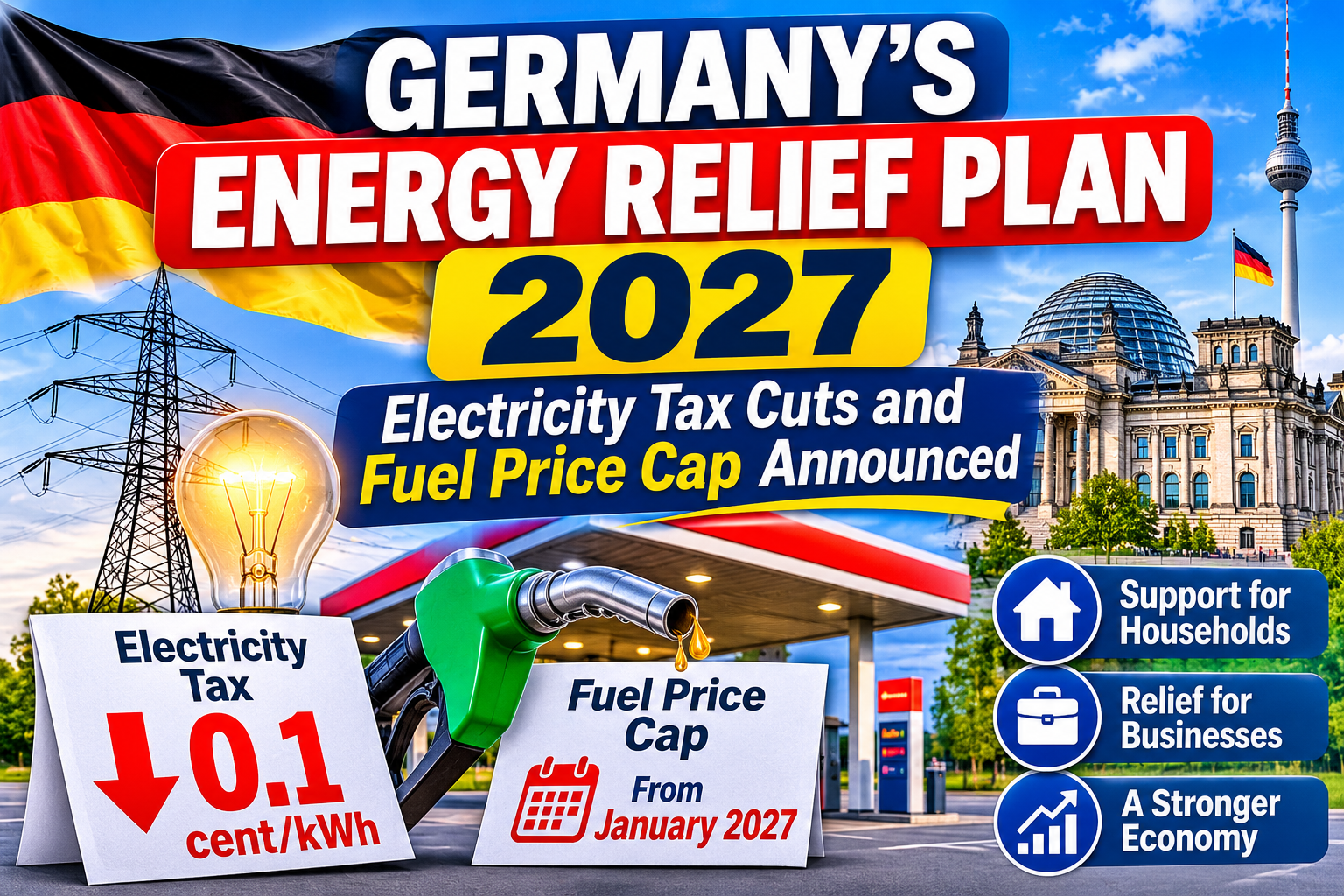
Germany Announces Energy Tax Relief and Fuel Price Measures to Support Households and Businesses
Germany | November 19, 2026
Germany’s government has announced a new package of energy relief measures aimed at reducing financial pressure on households and businesses as rising fuel and electricity costs continue to affect the country’s economy.
The agreement, announced on November 18 by Chancellor Friedrich Merz’s governing coalition, includes a major reduction in electricity taxes and plans for a temporary fuel price cap beginning in January 2027.
The announcement comes amid growing concerns about international energy market instability, particularly the impact of geopolitical tensions in the Middle East and disruptions affecting global oil supplies.
Under the proposed measures, electricity taxes for private households and eligible businesses will fall significantly, while a temporary pricing mechanism is intended to prevent excessive increases in petrol and diesel prices.
The government says the measures could provide billions of euros in financial relief and help consumers manage the continuing cost-of-living pressures.
Germany Plans Major Electricity Tax Reduction in 2027
One of the central elements of the government’s announcement is a substantial reduction in electricity taxation.
Germany currently charges households an electricity tax of 2.05 euro cents per kilowatt-hour. Under the new agreement, the rate is expected to fall to the European Union’s minimum level of 0.1 euro cents per kilowatt-hour.
The reduction is scheduled to begin on January 1, 2027, and initially remain in place until December 31, 2027.
According to the German government, the measure is expected to provide approximately €5 billion in additional financial relief for electricity consumers and businesses.
The proposed reduction is particularly relevant for households facing higher electricity bills and small businesses that depend on electricity for their daily operations.
Restaurants, supermarkets, hair salons and other commercial establishments could benefit from lower electricity expenses.
The government also intends to use available funds from the renewable energy support system to help finance the reduction.
Although the coalition has expressed an intention to continue the tax relief beyond 2027, its long-term financing will need to be addressed in future budget discussions.
Temporary Fuel Price Cap Expected From January 2027
Another major part of the agreement concerns petrol and diesel prices.
Germany plans to introduce a temporary fuel price cap from January 1, 2027, in response to rising costs at petrol stations.
The proposed system will establish maximum permitted prices using a transparent calculation formula linked to international market prices.
The government says the objective is to prevent excessive price increases and protect motorists from unfair pricing during the energy crisis.
The planned arrangement includes several important conditions:
- The fuel price cap is initially intended to operate for three months.
- Maximum prices will be calculated using international market prices.
- Regional exceptions may be permitted.
- Fuel supply security must be maintained.
- The measure is intended as temporary crisis support rather than permanent price regulation.
The government plans to coordinate the implementation process with fuel companies and regional authorities.
However, the announcement represents a political agreement rather than a fully implemented fuel pricing system. Further legislative and administrative decisions are still required.
Earlier Fuel Tax Cuts Already Introduced in 2026
Germany’s latest announcement follows an earlier effort to reduce fuel expenses.
In September 2026, the federal and state governments agreed to temporarily lower energy taxes on petrol and diesel.
The reduction took effect on October 1 and is scheduled to continue until December 31, 2026.
Under the arrangement, the energy tax on petrol and diesel was reduced by approximately 14 cents per litre. Including the associated VAT effect, the total tax relief amounts to approximately 17 cents per litre.
The government estimated that this package would provide around €2.5 billion in financial relief to households and businesses.
The measure was introduced to support commuters, families, transport operators and businesses affected by rising fuel expenses.
The planned January 2027 price cap would therefore represent an additional intervention following the temporary tax reduction already introduced this year.
Why Rising Energy Costs Matter to Germany’s Economy
Germany is one of Europe’s largest industrial economies, with manufacturing, transportation and international trade playing important roles in its economic activity.
Electricity and fuel are essential costs for many German industries. When energy prices rise, businesses can face higher production, transportation and operating expenses.
These increases can eventually affect the prices consumers pay for everyday products and services.
For households, expensive electricity and heating can reduce disposable income. Motorists also face higher commuting costs when petrol and diesel prices increase.
Small businesses may experience additional pressure because they often have fewer financial resources to absorb sudden increases in operating expenses.
Germany’s new measures are intended to address some of these challenges by reducing electricity taxation and limiting excessive fuel price increases.
However, the policies cannot completely protect the economy from international energy market fluctuations.
What the Measures Mean for German Households
For ordinary households, the electricity tax reduction could provide direct financial benefits.
A family using electricity throughout the year may see lower electricity-related tax expenses once the new rate takes effect.
The exact savings will depend on annual electricity consumption and the way electricity suppliers reflect the tax reduction in customer bills.
Motorists could also benefit from the proposed fuel price cap if it successfully limits excessive price increases.
People who depend on private vehicles for commuting, shopping and family responsibilities may particularly welcome measures that reduce transportation expenses.
Nevertheless, consumers should understand that a fuel price cap does not necessarily mean petrol and diesel prices will become permanently cheaper.
International oil prices, distribution expenses and other taxes will continue to influence the final price at petrol stations.
Businesses Welcome Attention to Energy Costs
The government’s announcement also has implications for German businesses.
Electricity-intensive companies have faced continuing pressure from energy expenses, while smaller businesses must manage operating costs alongside wages, rent and other financial commitments.
Lower electricity taxation could help improve business cash flow and reduce some operating expenses.
Retail businesses, hospitality companies and manufacturers may benefit from the proposed reduction, depending on their electricity consumption.
However, businesses also need longer-term certainty when planning investments and expansion.
Since the current electricity tax reduction is initially scheduled to last only through 2027, companies will be watching future government budget decisions closely.
The temporary nature of the fuel price cap also means that its long-term economic effects remain uncertain.
What Happens Next?
The next major milestone is January 1, 2027, when the electricity tax reduction and planned fuel price cap are expected to begin.
According to German public broadcaster ARD’s Tagesschau, the coalition agreement envisages a cabinet decision on the relevant draft legislation and regulation on December 2, 2026.
The government will need to complete the necessary legal and administrative procedures before the measures can be fully implemented.
Authorities will also need to monitor fuel pricing, market conditions and the effects of the tax reduction on consumers and businesses.
The future of the electricity tax relief beyond 2027 will depend on the government’s ability to establish a sustainable financing arrangement.
Conclusion
Germany’s latest energy relief announcement highlights the growing importance of affordable electricity and fuel for households, businesses and the wider economy.
The planned reduction in electricity taxes and temporary fuel price cap represent significant government efforts to address rising energy costs.
For consumers, the measures could provide additional financial breathing room. For businesses, lower electricity expenses may help reduce operating costs and support economic activity.
However, the actual impact will depend on implementation, international energy prices and the government’s ability to maintain financial support beyond the initial period.
As Germany prepares to introduce these measures in January 2027, households, motorists and businesses will be watching closely to see how much relief they deliver.
XARLIN DESK