Singapore 4:34 pm, Wednesday, 25 November 2026

Singapore Steps Up Gaza Winter-Aid Partnerships

  • Update Time : 03:38:42 pm, Saturday, 14 November 2026
  • / 32 View

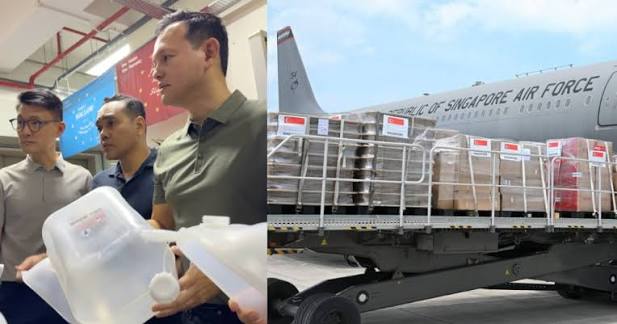
As winter descends on Gaza, Singapore has scaled up aid through the unified SG for Humanity network — launched November 5, 2026 — bringing four leading NGOs together to streamline delivery across the Rafah crossing. During a visit to Cairo on November 10, Acting Minister Zaqy Mohamad witnessed a landmark partnership agreement signed to speed up life-saving assistance into the Strip.

(Photo: Ministry of Digital Development and Information)

A Direct Partnership to Accelerate Aid Delivery

Days later, on November 10, during a visit to Cairo, Acting Minister Zaqy Mohamad witnessed the Rahmatan Lil Alamin Foundation (RLAF) sign a Letter of Understanding with the Egyptian Red Crescent (ERC) — formalising a direct partnership to channel aid across the Rafah crossing. RLAF handed over more than S$500,000** in funding to the ERC, while the Singapore Red Cross committed an additional **S$200,000, bringing the combined fresh contribution to over S$700,000.

The partnership means Singaporean aid will no longer rely solely on multi-layered international intermediaries. Instead, through the ERC — which manages the Egyptian side of the Rafah crossing — supplies can be tracked, timelines shortened, and bottlenecks identified more quickly. For donors and communities in Singapore, it offers greater transparency: contributions can be traced from donation drive to delivery point.

Acting Minister Zaqy Mohamad, who was in Cairo from November 10 to 14 to oversee the cooperation framework, emphasised the importance of this direct link: “Singapore may be a small country, but our people and our nation have not forgotten the people in Gaza. We are doing our part — not for recognition, but because it is the right thing to do. This partnership means our aid goes further, faster, and with greater certainty that it reaches those who need it most.” 

Why Winter Makes This Urgent

The timing of this scaled-up response is critical. The United Nations has repeatedly warned that Gaza faces a severe humanitarian crisis as winter sets in. Hundreds of thousands of displaced families are sheltering in makeshift tents, damaged buildings, and overcrowded UN facilities. Heavy seasonal rains have already begun, and temperatures are dropping sharply at night — conditions that are dangerous for everyone, but especially life-threatening for children, the elderly, and people already weakened by months of displacement and limited access to healthcare.

Shelter materials, warm blankets, waterproof sheeting, and clean drinking water are as urgently needed as food and medicine. Without adequate winterisation support, the risk of illness, hypothermia, and outbreak of disease rises dramatically — particularly in areas where sanitation infrastructure has been destroyed or damaged.

How the Four Partners Are Responding

Through the SG for Humanity network, each organisation brings specialised focus areas, creating a comprehensive support package rather than overlapping efforts:

Rahmatan Lil Alamin Foundation (RLAF)

RLAF is focusing on community-level support — delivering hot meals through mobile community kitchens, distributing food parcels, and ensuring families have access to clean drinking water. It is also delivering medical supplies and essential medicines through local health facilities, alongside winter kits containing blankets, warm clothing, and shelter materials. Recognising that children make up nearly half of Gaza’s population, RLAF is setting up mobile learning spaces and providing psychosocial support to help young people cope with ongoing trauma. The foundation is also planning expanded food programmes through Ramadan and into 2027, including Qurban meat distribution.

Singapore Red Cross (SRC)

The SRC has committed S$200,000 through the Egyptian Red Crescent, bringing its total contribution since the conflict began to nearly **S$958,000**. It has delivered tents providing shelter for more than 6,500 displaced people, water filtration systems, hygiene kits, and essential medical supplies. The Red Cross also continues to support mental health and psychological services, training frontline responders and providing direct counselling to survivors. Its partnership with the International Committee of the Red Cross (ICRC) also ensures independent monitoring of delivery conditions — an essential safeguard in conflict zones.

Mercy Relief

Mercy Relief is taking a slightly different approach — supporting both immediate needs and the local economy. From November 2026 through February 2027, it will provide hot meals and food parcels to approximately 7,800 people. Critically, wherever possible, ingredients are being sourced from local farmers and women’s producer groups in Gaza and the surrounding region. This dual strategy feeds vulnerable families while keeping local food producers in business — building resilience rather than creating dependency. The organisation is also running daily meal programmes at four temporary learning spaces, ensuring 850 children and teachers receive at least one nutritious meal each school day.

Humanity Matters

Focusing particularly on the most vulnerable — patients, caregivers, and families in temporary accommodation — Humanity Matters is distributing winterised blankets and hygiene kits at the Palestine Hospital and surrounding shelters. The organisation is also providing waterproof tarpaulins and floor coverings to help reinforce tents against rain and cold, responding to reports that recent storms have already flooded dozens of displacement sites.

Beyond Donations — Improving the Aid Architecture

The real significance of SG for Humanity lies not just in the amount of money raised — Singapore’s total contribution since October 2023 now exceeds S$25 million — but in how it changes the mechanics of giving. Before this coordinated network was established, Singaporean NGOs operated largely independently, each navigating complex approval processes, crossing points, and logistical chains separately. This often created delays, duplication, and uncertainty for donors.

Now, through unified agreements with the Egyptian Red Crescent and the Palestinian Red Crescent Society, the four organisations can:

  • Coordinate delivery schedules so convoys arrive together rather than piecemeal
  • Share transport and storage costs, stretching donations further
  • Avoid flooding the same locations while leaving others unserved
  • Provide a single, transparent update platform so Singaporeans can see exactly what their contributions have achieved

This coordination is particularly important given the ongoing constraints on aid entry. Even in the best of times, only a fraction of the pre-conflict volume of goods can enter Gaza daily. When access is limited, efficiency matters more than ever — every truckload must count.

A People-Led Effort

Behind the official agreements and funding numbers lies something equally powerful: the compassion of ordinary Singaporeans. The SG for Humanity initiative grew from a recognition that Singaporeans care deeply about humanitarian crises around the world and want their collective voice to be heard. By bringing government, civil society, and the public onto one platform, it channels individual generosity into sustained, organised impact.

Schools, community centres, religious groups, and corporate donors across the island have come together — not out of political alignment, but out of shared humanity. As one volunteer put it: “We may be far away, but distance is no excuse for indifference.”

The Road Ahead

Winter in Gaza will last at least another three months. Even when the cold eases, the damage to infrastructure, livelihoods, and public health will persist for years. The agreements signed in Cairo this month provide a framework not just for immediate relief, but for sustained support through 2027 and beyond.

For Singapore, this moment represents more than a humanitarian gesture. It demonstrates that small nations, working together through principled diplomacy and trusted partnerships, can make a tangible difference on the global stage. It shows that aid delivered with coordination, transparency, and direct accountability is not just more effective — it builds hope. And in Gaza this winter, hope may be the most essential supply of all.


Tags:
XARLIN DESK

Singapore Steps Up Gaza Winter-Aid Partnerships

Update Time : 03:38:42 pm, Saturday, 14 November 2026

As winter descends on Gaza, Singapore has scaled up aid through the unified SG for Humanity network — launched November 5, 2026 — bringing four leading NGOs together to streamline delivery across the Rafah crossing. During a visit to Cairo on November 10, Acting Minister Zaqy Mohamad witnessed a landmark partnership agreement signed to speed up life-saving assistance into the Strip.

(Photo: Ministry of Digital Development and Information)

A Direct Partnership to Accelerate Aid Delivery

Days later, on November 10, during a visit to Cairo, Acting Minister Zaqy Mohamad witnessed the Rahmatan Lil Alamin Foundation (RLAF) sign a Letter of Understanding with the Egyptian Red Crescent (ERC) — formalising a direct partnership to channel aid across the Rafah crossing. RLAF handed over more than S$500,000** in funding to the ERC, while the Singapore Red Cross committed an additional **S$200,000, bringing the combined fresh contribution to over S$700,000.

The partnership means Singaporean aid will no longer rely solely on multi-layered international intermediaries. Instead, through the ERC — which manages the Egyptian side of the Rafah crossing — supplies can be tracked, timelines shortened, and bottlenecks identified more quickly. For donors and communities in Singapore, it offers greater transparency: contributions can be traced from donation drive to delivery point.

Acting Minister Zaqy Mohamad, who was in Cairo from November 10 to 14 to oversee the cooperation framework, emphasised the importance of this direct link: “Singapore may be a small country, but our people and our nation have not forgotten the people in Gaza. We are doing our part — not for recognition, but because it is the right thing to do. This partnership means our aid goes further, faster, and with greater certainty that it reaches those who need it most.” 

Why Winter Makes This Urgent

The timing of this scaled-up response is critical. The United Nations has repeatedly warned that Gaza faces a severe humanitarian crisis as winter sets in. Hundreds of thousands of displaced families are sheltering in makeshift tents, damaged buildings, and overcrowded UN facilities. Heavy seasonal rains have already begun, and temperatures are dropping sharply at night — conditions that are dangerous for everyone, but especially life-threatening for children, the elderly, and people already weakened by months of displacement and limited access to healthcare.

Shelter materials, warm blankets, waterproof sheeting, and clean drinking water are as urgently needed as food and medicine. Without adequate winterisation support, the risk of illness, hypothermia, and outbreak of disease rises dramatically — particularly in areas where sanitation infrastructure has been destroyed or damaged.

How the Four Partners Are Responding

Through the SG for Humanity network, each organisation brings specialised focus areas, creating a comprehensive support package rather than overlapping efforts:

Rahmatan Lil Alamin Foundation (RLAF)

RLAF is focusing on community-level support — delivering hot meals through mobile community kitchens, distributing food parcels, and ensuring families have access to clean drinking water. It is also delivering medical supplies and essential medicines through local health facilities, alongside winter kits containing blankets, warm clothing, and shelter materials. Recognising that children make up nearly half of Gaza’s population, RLAF is setting up mobile learning spaces and providing psychosocial support to help young people cope with ongoing trauma. The foundation is also planning expanded food programmes through Ramadan and into 2027, including Qurban meat distribution.

Singapore Red Cross (SRC)

The SRC has committed S$200,000 through the Egyptian Red Crescent, bringing its total contribution since the conflict began to nearly **S$958,000**. It has delivered tents providing shelter for more than 6,500 displaced people, water filtration systems, hygiene kits, and essential medical supplies. The Red Cross also continues to support mental health and psychological services, training frontline responders and providing direct counselling to survivors. Its partnership with the International Committee of the Red Cross (ICRC) also ensures independent monitoring of delivery conditions — an essential safeguard in conflict zones.

Mercy Relief

Mercy Relief is taking a slightly different approach — supporting both immediate needs and the local economy. From November 2026 through February 2027, it will provide hot meals and food parcels to approximately 7,800 people. Critically, wherever possible, ingredients are being sourced from local farmers and women’s producer groups in Gaza and the surrounding region. This dual strategy feeds vulnerable families while keeping local food producers in business — building resilience rather than creating dependency. The organisation is also running daily meal programmes at four temporary learning spaces, ensuring 850 children and teachers receive at least one nutritious meal each school day.

Humanity Matters

Focusing particularly on the most vulnerable — patients, caregivers, and families in temporary accommodation — Humanity Matters is distributing winterised blankets and hygiene kits at the Palestine Hospital and surrounding shelters. The organisation is also providing waterproof tarpaulins and floor coverings to help reinforce tents against rain and cold, responding to reports that recent storms have already flooded dozens of displacement sites.

Beyond Donations — Improving the Aid Architecture

The real significance of SG for Humanity lies not just in the amount of money raised — Singapore’s total contribution since October 2023 now exceeds S$25 million — but in how it changes the mechanics of giving. Before this coordinated network was established, Singaporean NGOs operated largely independently, each navigating complex approval processes, crossing points, and logistical chains separately. This often created delays, duplication, and uncertainty for donors.

Now, through unified agreements with the Egyptian Red Crescent and the Palestinian Red Crescent Society, the four organisations can:

  • Coordinate delivery schedules so convoys arrive together rather than piecemeal
  • Share transport and storage costs, stretching donations further
  • Avoid flooding the same locations while leaving others unserved
  • Provide a single, transparent update platform so Singaporeans can see exactly what their contributions have achieved

This coordination is particularly important given the ongoing constraints on aid entry. Even in the best of times, only a fraction of the pre-conflict volume of goods can enter Gaza daily. When access is limited, efficiency matters more than ever — every truckload must count.

A People-Led Effort

Behind the official agreements and funding numbers lies something equally powerful: the compassion of ordinary Singaporeans. The SG for Humanity initiative grew from a recognition that Singaporeans care deeply about humanitarian crises around the world and want their collective voice to be heard. By bringing government, civil society, and the public onto one platform, it channels individual generosity into sustained, organised impact.

Schools, community centres, religious groups, and corporate donors across the island have come together — not out of political alignment, but out of shared humanity. As one volunteer put it: “We may be far away, but distance is no excuse for indifference.”

The Road Ahead

Winter in Gaza will last at least another three months. Even when the cold eases, the damage to infrastructure, livelihoods, and public health will persist for years. The agreements signed in Cairo this month provide a framework not just for immediate relief, but for sustained support through 2027 and beyond.

For Singapore, this moment represents more than a humanitarian gesture. It demonstrates that small nations, working together through principled diplomacy and trusted partnerships, can make a tangible difference on the global stage. It shows that aid delivered with coordination, transparency, and direct accountability is not just more effective — it builds hope. And in Gaza this winter, hope may be the most essential supply of all.