Portugal Restaurant Bankruptcies Rise 15% in 2026

- Update Time : 02:58:46 pm, Thursday, 19 November 2026
- / 21 View
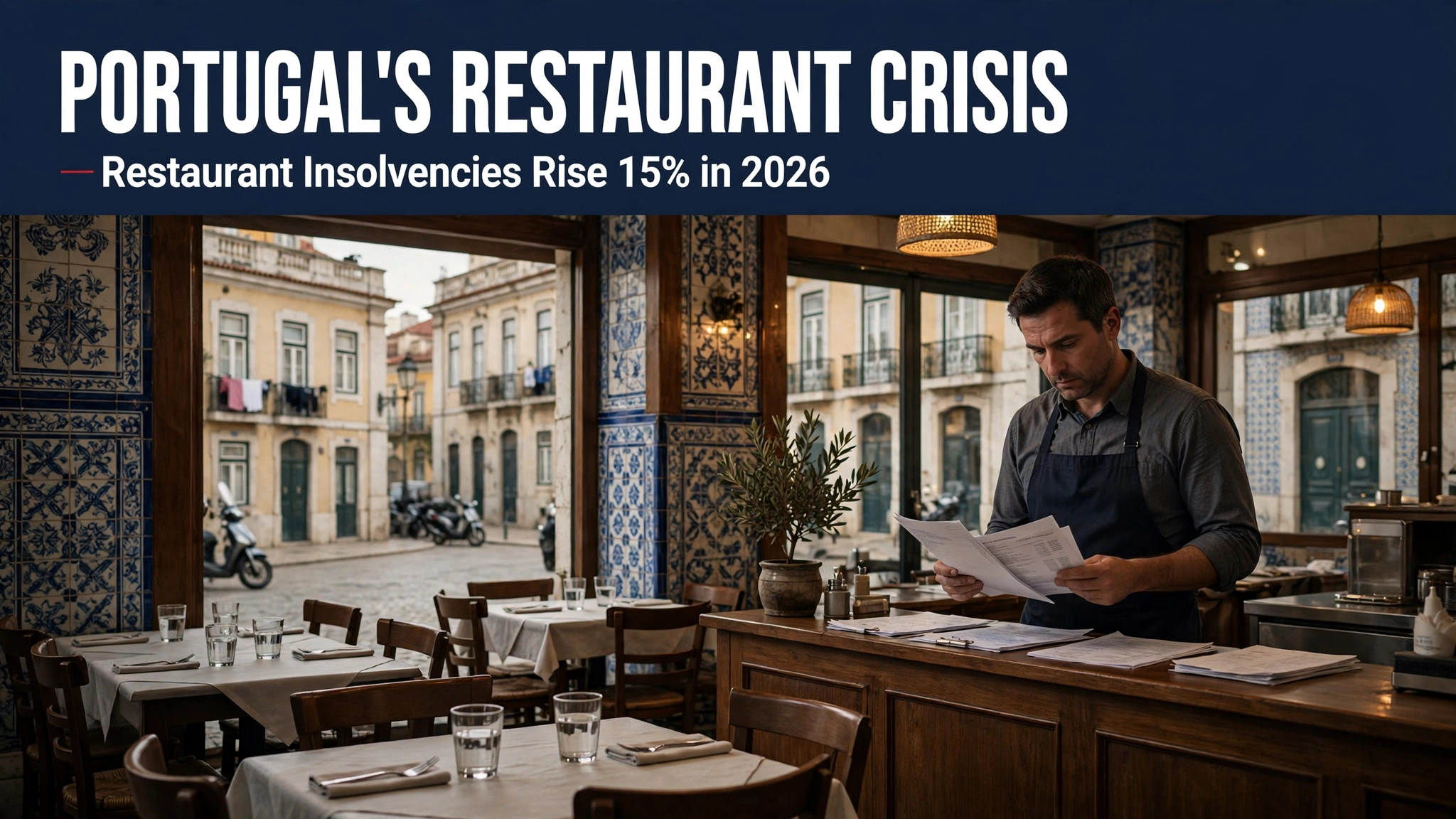
Portugal’s Restaurant Industry Faces Growing Bankruptcy Crisis as Insolvencies Rise 15%
Portugal’s restaurant industry is facing increasing financial pressure, with insolvency cases rising 15% in the first ten months of 2026. Higher operating costs, expensive food supplies and weaker consumer purchasing power are adding to the challenges facing businesses across the country.
Portugal’s restaurant industry is experiencing another difficult year as an increasing number of businesses struggle to remain financially sustainable. New figures published by business information company Informa D&B show that restaurant insolvencies increased significantly between January and October 2026, highlighting the financial difficulties affecting one of the country’s important service industries.
According to the latest data, 180 restaurant businesses entered insolvency proceedings during the first ten months of 2026, representing a 15% increase compared with the same period in 2025.
The wider accommodation and restaurant sector recorded 202 new insolvency proceedings during the same period. The figures indicate that financial difficulties in the hospitality industry are continuing, even as insolvencies across Portugal’s wider business community have started to decline.
The development raises concerns about the financial sustainability of smaller businesses, employment opportunities and the future of independent restaurants in one of Europe’s established tourism destinations.
Restaurant Insolvencies Rise While Other Business Sectors Improve
The latest figures reveal a contrast between Portugal’s restaurant industry and the wider national business environment.
Between January and October 2026, Portugal recorded 1,653 companies entering new insolvency proceedings across all business sectors. This represented a decline of 1.6% compared with the corresponding period in 2025.
Restaurant businesses, however, moved in the opposite direction.
The 180 restaurant insolvency cases accounted for approximately 11% of all business insolvencies recorded nationally during the ten-month period.
According to Informa D&B, the increase in accommodation and restaurant insolvencies reflects a trend that has continued since 2023.
Lisbon and Porto accounted for the majority of restaurant businesses entering insolvency proceedings. However, the district of Aveiro recorded the largest year-on-year increase, with 12 more restaurant insolvency cases than during the same period in 2025.
These figures suggest that financial difficulties are not limited to Portugal’s largest urban centres.
Rising Operating Costs Put Pressure on Restaurant Owners
One of the major challenges facing Portuguese restaurant operators is the increasing cost of running their businesses.
Restaurants depend on a combination of food supplies, electricity, water, rent, salaries, transportation and other essential services. When several of these expenses increase simultaneously, businesses can find it difficult to maintain profitability.
Industry representatives have repeatedly identified operating expenses and taxation as significant challenges.
In July 2026, Jornal Económico reported concerns raised by the Portuguese Association of Hotels, Restaurants and Similar Establishments (AHRESP) about the financial pressure affecting restaurant businesses.
The report highlighted rising food prices, operating costs and pressure on household purchasing power.
Some food categories experienced particularly significant price increases during the first half of 2026. These included dried and salted fish, fresh fish, seafood and vegetables.
For restaurant owners, these increases create a difficult business decision. Raising menu prices can help recover additional expenses, but customers facing their own financial pressures may become less willing to spend money eating outside their homes.
Consequently, restaurants can experience pressure on both sides of their businesses: higher costs and more cautious consumer spending.
Restaurant Closures Add to Industry Concerns
The financial difficulties extend beyond formal insolvency proceedings.
Data from DIG-IN, a technology and data analysis platform covering Portugal’s restaurant industry, revealed an imbalance between new establishments and closures during the first five months of 2026.
Between January and May, Portugal recorded 6,446 new restaurant establishments and 9,279 closures, resulting in a negative balance of 2,833 establishments.
These figures provide another indication of the challenges facing the industry.
However, it is important to distinguish between business closures and insolvencies. A restaurant can close for several reasons, including retirement, relocation, changes in ownership or commercial decisions. Not every closure means that a business has become insolvent.
Nevertheless, the difference between openings and closures suggests that the restaurant market is experiencing considerable changes.
Smaller independent restaurants and family-run establishments may have fewer financial resources to absorb prolonged increases in operating expenses.
Why Portugal’s Restaurant Industry Matters to Its Economy
Restaurants play an important role in Portugal’s tourism, hospitality and local business sectors.
Cities such as Lisbon and Porto attract international visitors throughout the year, while traditional restaurants, cafés and family-owned food businesses contribute to the country’s cultural identity.
The restaurant industry also supports employment across several areas, including food preparation, hospitality, transportation, agriculture and food distribution.
Financial difficulties among restaurant operators can therefore affect more than individual business owners.
When establishments close, employees may lose their jobs, suppliers can lose customers and local communities may experience a reduction in available services.
Tourism is an important part of Portugal’s economy, making the financial health of restaurants particularly relevant to the wider hospitality industry.
Although the latest insolvency statistics do not establish how many jobs are affected, the continued increase in formal insolvency proceedings highlights an issue that deserves attention from businesses and policymakers.
Can Government Support Help Restaurants Recover?
The financial pressure facing Portugal’s restaurant industry has also brought attention to possible government support and measures designed to improve business sustainability.
Earlier in 2026, industry representatives called for measures addressing financial difficulties among restaurants, particularly smaller businesses dealing with rising expenses and outstanding debt.
Support for restructuring business debt, improving access to financing and reducing administrative pressure could help some companies manage financial difficulties.
However, financial assistance alone may not resolve the underlying challenges.
Restaurant operators must also deal with changing consumer habits, competition, food price fluctuations and the difficulty of maintaining affordable menu prices while protecting profit margins.
A sustainable recovery will depend on several factors, including economic conditions, consumer confidence, business investment and the ability of restaurant owners to manage operating expenses.
What Happens Next for Portugal’s Restaurant Industry?
The latest insolvency figures provide a warning about the financial conditions facing Portugal’s restaurant businesses.
With 180 restaurant insolvency proceedings recorded between January and October 2026, the industry is moving in a different direction from the wider Portuguese business sector.
The coming months will be important in determining whether the increase continues or whether businesses begin to experience more stable conditions.
For restaurant owners, controlling costs while retaining customers will remain a major challenge. For policymakers, the figures highlight the importance of supporting business sustainability and protecting employment across the hospitality sector.
Portugal remains an important European tourism destination, but the latest statistics show that a strong tourism profile does not automatically guarantee financial security for every restaurant.
The future of the country’s restaurant industry will depend on whether businesses can adapt to higher operating expenses and changing consumer demand without compromising their long-term financial stability.
Sources: Informa D&B Report, Diário de Notícias, Jornal Económico, ECO.
XARLIN DESK