Singapore 7:55 pm, Wednesday, 25 November 2026

Jensen Huang Returns as NVIDIA CEO After Leadership Crisis

  • Update Time : 03:08:45 pm, Tuesday, 24 November 2026
  • / 13 View

Jensen Huang Returns as NVIDIA CEO After Dramatic Leadership Crisis

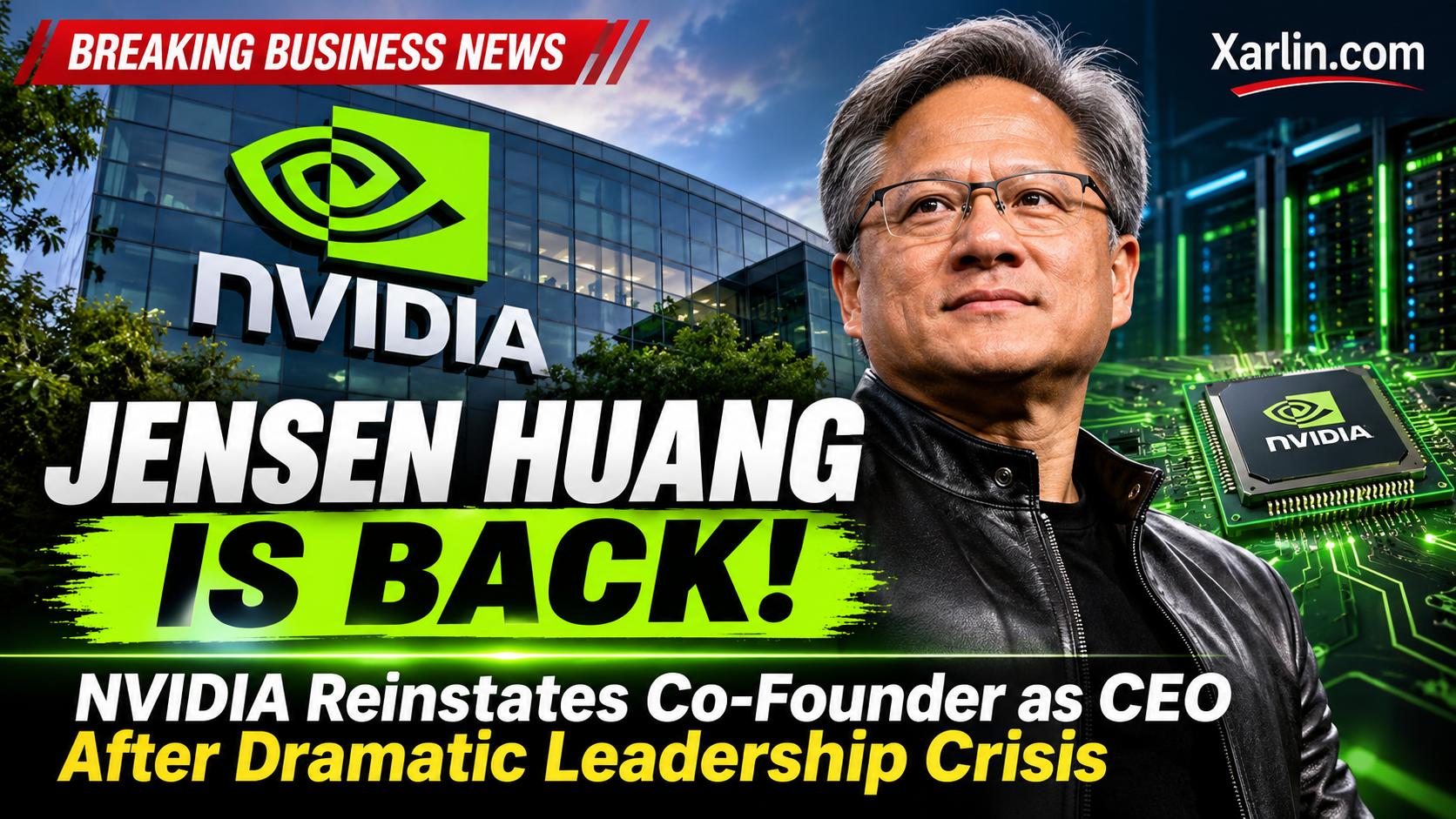
NVIDIA has reinstated co-founder Jensen Huang as its president and chief executive officer, reversing his resignation less than two weeks earlier. The decision has attracted worldwide attention, boosted technology stocks and raised fresh questions about corporate governance, artificial intelligence and the future of the global semiconductor industry.

SANTA CLARA, California – November 24, 2026 – NVIDIA has officially reinstated Jensen Huang as its president and chief executive officer, marking a dramatic turnaround in one of the technology industry’s most closely watched leadership developments this year.

The announcement, made on November 23, follows Huang’s resignation on November 12 and a period of uncertainty surrounding the company’s leadership.

NVIDIA’s board of directors voted unanimously to bring Huang back, stating that discussions with him had provided sufficient confidence in his ability to lead the company. The board also said it had received input from senior levels of the United States government and concluded that his reinstatement did not present a national security risk.

Huang’s return comes at a particularly important time for NVIDIA, which remains one of the world’s most influential companies in artificial intelligence (AI), advanced computing and semiconductor manufacturing.

Why Did Jensen Huang Leave NVIDIA?

On November 12, NVIDIA announced that Jensen Huang had resigned from his positions as president, chief executive officer and board director, effective immediately.

The company appointed its chief financial officer, Colette Kress, as interim CEO while beginning the search for a permanent successor.

The announcement created uncertainty across the technology industry because Huang has been closely associated with NVIDIA’s growth and its position in the global artificial intelligence market.

His departure also attracted attention following reports concerning his personal relationships and possible foreign intelligence-related concerns.

NVIDIA subsequently established an independent committee to investigate matters involving a reported foreign intelligence effort targeting Huang. The company has also continued to cooperate with government investigations and inquiries.

The circumstances surrounding the resignation and subsequent reinstatement have raised questions about leadership accountability and the responsibilities of major technology companies.

NVIDIA Board Unanimously Reinstates Jensen Huang

On November 23, NVIDIA announced that its board had unanimously voted to reinstate Huang as president, CEO and a member of the board.

According to the company’s official statement, the decision followed discussions and meetings with Huang.

Board chairman Harvey C. Jones said the board believed Huang was the right person to lead NVIDIA and that his return was in the best interests of shareholders, employees, partners and customers.

Huang also expressed appreciation for the board’s confidence and acknowledged the support of the company’s employees and leadership team during the transition.

Colette Kress, who served as interim CEO, will continue her responsibilities as NVIDIA’s chief financial officer.

Harvey Jones will remain chairman of the board.

However, NVIDIA confirmed that its independent investigation would continue despite Huang’s return.

The company has also established a National Security and Export Control Committee to oversee relevant compliance and security matters.

NVIDIA Shares Surge Following Huang’s Return

Financial markets reacted strongly to the announcement.

NVIDIA shares surged approximately 31.5% on November 23, according to Reuters, adding close to $1 trillion to the company’s market value.

The rally also supported broader technology markets, with major stock indexes recording significant gains.

Investors appeared encouraged by the return of a leader closely associated with NVIDIA’s business strategy, technological development and relationships with major customers.

The market reaction demonstrates how important Huang’s leadership has become to investor confidence.

However, the sharp increase in share prices does not necessarily mean that all concerns surrounding the company have disappeared.

Analysts continue to monitor NVIDIA’s corporate governance, regulatory environment and long-term artificial intelligence investment outlook.

Why Jensen Huang’s Leadership Matters to the Global AI Industry

Jensen Huang is widely recognised as one of the most influential figures in modern computing.

He co-founded NVIDIA in 1993 and helped transform the company from a graphics processor manufacturer into a global technology leader.

NVIDIA’s graphics processing units (GPUs) have become essential components in many artificial intelligence systems.

These processors are used to train and operate advanced AI models, support large-scale data centres and power applications across industries.

Today, NVIDIA’s technology plays an important role in the development of:

  • Artificial intelligence and machine learning.
  • Cloud computing and data centres.
  • Autonomous vehicles and robotics.
  • Scientific research and advanced computing.
  • Generative AI applications and digital services.

Huang’s return therefore has implications beyond NVIDIA itself.

The company maintains important relationships with technology businesses, cloud service providers, semiconductor manufacturers and AI developers worldwide.

A period of leadership uncertainty at NVIDIA can influence confidence throughout the wider technology supply chain.

Political and Regulatory Questions Remain

Although investors welcomed Huang’s reinstatement, the decision has generated questions about the relationship between major technology companies and government authorities.

NVIDIA said it received input from senior US government officials before the board reached its decision.

President Donald Trump also publicly welcomed Huang’s return.

However, the involvement of government officials has attracted attention from lawmakers and raised questions about corporate independence, national security and potential conflicts of interest.

Another important issue involves advanced semiconductor exports to China.

The United States has introduced restrictions on certain advanced computing chips because of concerns about national security and their potential military applications.

NVIDIA’s business relationships with international markets, particularly China, remain an important subject for policymakers.

Huang is also expected to face congressional scrutiny over semiconductor exports and related national security questions.

These developments could influence NVIDIA’s business strategy and the broader international technology industry.

What Happens Next for NVIDIA?

Huang’s reinstatement brings an important level of leadership continuity back to NVIDIA, but several challenges remain.

The company’s independent investigation is expected to continue, while government inquiries and regulatory questions will remain under scrutiny.

Investors will also be watching NVIDIA’s financial performance, AI infrastructure demand and its ability to maintain its competitive position in the semiconductor industry.

Competition from other chip manufacturers and the development of specialised AI processors could create additional pressure in the coming years.

For NVIDIA, the immediate priority will be maintaining customer confidence, advancing its technology roadmap and addressing concerns surrounding corporate governance and regulatory compliance.

Huang’s return may help restore confidence among investors and employees, but the longer-term impact will depend on how the company handles the challenges ahead.

Conclusion

Jensen Huang’s return as NVIDIA CEO marks a significant development for the global technology industry.

The board’s decision has ended a period of leadership uncertainty, triggered a strong market reaction and renewed attention on the company’s central role in artificial intelligence.

However, the continuing investigations and questions surrounding corporate governance mean that NVIDIA’s challenges are far from over.

As artificial intelligence continues to reshape the global economy, the decisions made by NVIDIA and its leadership could have consequences extending well beyond Silicon Valley.

For now, Jensen Huang is back at the helm of the company he co-founded, and the technology industry will be watching closely to see what happens next.

Source: reuters

XARLIN DESK

Jensen Huang Returns as NVIDIA CEO After Leadership Crisis

Update Time : 03:08:45 pm, Tuesday, 24 November 2026

Jensen Huang Returns as NVIDIA CEO After Dramatic Leadership Crisis

NVIDIA has reinstated co-founder Jensen Huang as its president and chief executive officer, reversing his resignation less than two weeks earlier. The decision has attracted worldwide attention, boosted technology stocks and raised fresh questions about corporate governance, artificial intelligence and the future of the global semiconductor industry.

SANTA CLARA, California – November 24, 2026 – NVIDIA has officially reinstated Jensen Huang as its president and chief executive officer, marking a dramatic turnaround in one of the technology industry’s most closely watched leadership developments this year.

The announcement, made on November 23, follows Huang’s resignation on November 12 and a period of uncertainty surrounding the company’s leadership.

NVIDIA’s board of directors voted unanimously to bring Huang back, stating that discussions with him had provided sufficient confidence in his ability to lead the company. The board also said it had received input from senior levels of the United States government and concluded that his reinstatement did not present a national security risk.

Huang’s return comes at a particularly important time for NVIDIA, which remains one of the world’s most influential companies in artificial intelligence (AI), advanced computing and semiconductor manufacturing.

Why Did Jensen Huang Leave NVIDIA?

On November 12, NVIDIA announced that Jensen Huang had resigned from his positions as president, chief executive officer and board director, effective immediately.

The company appointed its chief financial officer, Colette Kress, as interim CEO while beginning the search for a permanent successor.

The announcement created uncertainty across the technology industry because Huang has been closely associated with NVIDIA’s growth and its position in the global artificial intelligence market.

His departure also attracted attention following reports concerning his personal relationships and possible foreign intelligence-related concerns.

NVIDIA subsequently established an independent committee to investigate matters involving a reported foreign intelligence effort targeting Huang. The company has also continued to cooperate with government investigations and inquiries.

The circumstances surrounding the resignation and subsequent reinstatement have raised questions about leadership accountability and the responsibilities of major technology companies.

NVIDIA Board Unanimously Reinstates Jensen Huang

On November 23, NVIDIA announced that its board had unanimously voted to reinstate Huang as president, CEO and a member of the board.

According to the company’s official statement, the decision followed discussions and meetings with Huang.

Board chairman Harvey C. Jones said the board believed Huang was the right person to lead NVIDIA and that his return was in the best interests of shareholders, employees, partners and customers.

Huang also expressed appreciation for the board’s confidence and acknowledged the support of the company’s employees and leadership team during the transition.

Colette Kress, who served as interim CEO, will continue her responsibilities as NVIDIA’s chief financial officer.

Harvey Jones will remain chairman of the board.

However, NVIDIA confirmed that its independent investigation would continue despite Huang’s return.

The company has also established a National Security and Export Control Committee to oversee relevant compliance and security matters.

NVIDIA Shares Surge Following Huang’s Return

Financial markets reacted strongly to the announcement.

NVIDIA shares surged approximately 31.5% on November 23, according to Reuters, adding close to $1 trillion to the company’s market value.

The rally also supported broader technology markets, with major stock indexes recording significant gains.

Investors appeared encouraged by the return of a leader closely associated with NVIDIA’s business strategy, technological development and relationships with major customers.

The market reaction demonstrates how important Huang’s leadership has become to investor confidence.

However, the sharp increase in share prices does not necessarily mean that all concerns surrounding the company have disappeared.

Analysts continue to monitor NVIDIA’s corporate governance, regulatory environment and long-term artificial intelligence investment outlook.

Why Jensen Huang’s Leadership Matters to the Global AI Industry

Jensen Huang is widely recognised as one of the most influential figures in modern computing.

He co-founded NVIDIA in 1993 and helped transform the company from a graphics processor manufacturer into a global technology leader.

NVIDIA’s graphics processing units (GPUs) have become essential components in many artificial intelligence systems.

These processors are used to train and operate advanced AI models, support large-scale data centres and power applications across industries.

Today, NVIDIA’s technology plays an important role in the development of:

  • Artificial intelligence and machine learning.
  • Cloud computing and data centres.
  • Autonomous vehicles and robotics.
  • Scientific research and advanced computing.
  • Generative AI applications and digital services.

Huang’s return therefore has implications beyond NVIDIA itself.

The company maintains important relationships with technology businesses, cloud service providers, semiconductor manufacturers and AI developers worldwide.

A period of leadership uncertainty at NVIDIA can influence confidence throughout the wider technology supply chain.

Political and Regulatory Questions Remain

Although investors welcomed Huang’s reinstatement, the decision has generated questions about the relationship between major technology companies and government authorities.

NVIDIA said it received input from senior US government officials before the board reached its decision.

President Donald Trump also publicly welcomed Huang’s return.

However, the involvement of government officials has attracted attention from lawmakers and raised questions about corporate independence, national security and potential conflicts of interest.

Another important issue involves advanced semiconductor exports to China.

The United States has introduced restrictions on certain advanced computing chips because of concerns about national security and their potential military applications.

NVIDIA’s business relationships with international markets, particularly China, remain an important subject for policymakers.

Huang is also expected to face congressional scrutiny over semiconductor exports and related national security questions.

These developments could influence NVIDIA’s business strategy and the broader international technology industry.

What Happens Next for NVIDIA?

Huang’s reinstatement brings an important level of leadership continuity back to NVIDIA, but several challenges remain.

The company’s independent investigation is expected to continue, while government inquiries and regulatory questions will remain under scrutiny.

Investors will also be watching NVIDIA’s financial performance, AI infrastructure demand and its ability to maintain its competitive position in the semiconductor industry.

Competition from other chip manufacturers and the development of specialised AI processors could create additional pressure in the coming years.

For NVIDIA, the immediate priority will be maintaining customer confidence, advancing its technology roadmap and addressing concerns surrounding corporate governance and regulatory compliance.

Huang’s return may help restore confidence among investors and employees, but the longer-term impact will depend on how the company handles the challenges ahead.

Conclusion

Jensen Huang’s return as NVIDIA CEO marks a significant development for the global technology industry.

The board’s decision has ended a period of leadership uncertainty, triggered a strong market reaction and renewed attention on the company’s central role in artificial intelligence.

However, the continuing investigations and questions surrounding corporate governance mean that NVIDIA’s challenges are far from over.

As artificial intelligence continues to reshape the global economy, the decisions made by NVIDIA and its leadership could have consequences extending well beyond Silicon Valley.

For now, Jensen Huang is back at the helm of the company he co-founded, and the technology industry will be watching closely to see what happens next.

Source: reuters