Singapore 8:06 pm, Wednesday, 25 November 2026

Microsoft Outage Disrupts Australian Spy Agency and Police

  • Update Time : 05:42:35 am, Friday, 13 November 2026
  • / 23 View

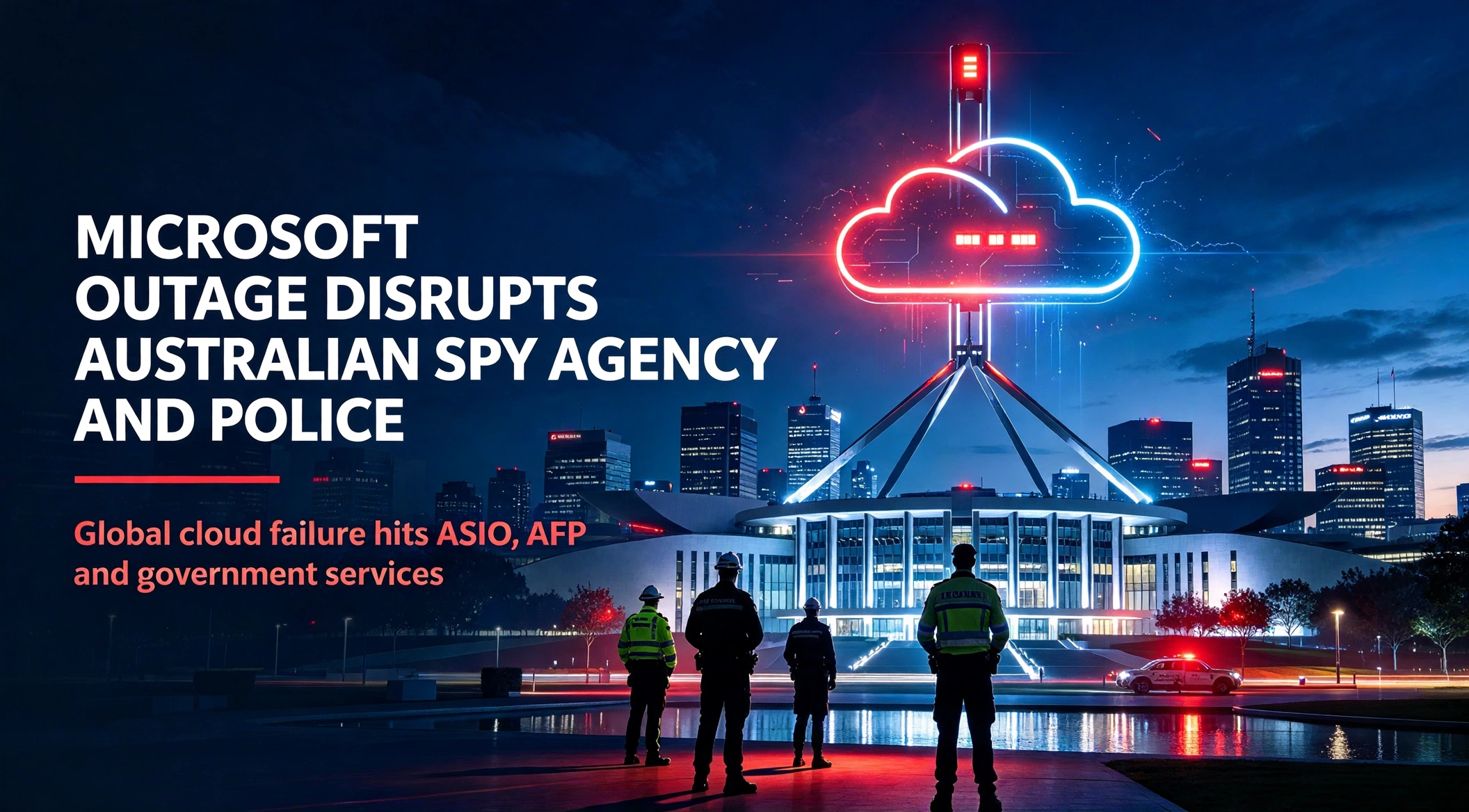
A global Microsoft 365 outage disrupted operations at two of Australia’s key security agencies, ASIO and the AFP, on Friday morning, November 13, 2026. The incident highlights the government’s reliance on a small number of technology providers and the risks that come with service disruptions.

What Happened and When

The outage began around 5:00 a.m. AEDT on November 13, affecting Microsoft’s global cloud services. Users worldwide reported problems accessing Outlook, Teams, SharePoint, and other tools. In Australia, government agencies, broadcasters, healthcare services, and businesses also reported disruptions.

ASIO Director-General Mike Burgess said the agency was affected mainly through its email system, though other operating levels remained available. AFP Commissioner Krissy Barrett also confirmed problems with the agency’s digital services. The ABC reported communication issues, while Queensland Health and Service NSW faced operational challenges.

What Caused the Outage

Microsoft blamed the outage on a problematic update that overloaded parts of its global infrastructure. Early comparisons were made with the 2024 CrowdStrike outage, when a faulty software update disrupted millions of Windows devices. But Home Affairs Minister Tony Burke said Microsoft had advised the Australian government that this incident was caused by a technical error, not a cyberattack or security breach.

Burke activated a cyber security agreement between the government and Microsoft to prioritize support for critical Australian agencies. “That agreement means we’re not standing in the queue,” he said. “Our critical agencies are being attended to first alongside other governments around the world.”

Key Lessons and Questions Raised

The outage has raised questions about how well government technology can withstand major disruptions. If one software update can interrupt email across several critical agencies, how prepared are they for a more serious failure? Three lessons stand out.

First, avoid relying on a single provider for essential services. That creates a “single point of failure.” Governments and critical service providers need alternative ways to communicate as part of their everyday operations, not just as a backup.

Second, clear updates matter during a crisis. Confirming that the outage was not a cyberattack helped agencies focus on restoring services and reassured the public. Service providers and government authorities need to communicate quickly and transparently when disruptions occur.

Third, priority support agreements can help. Australia’s existing arrangement with Microsoft gave critical agencies faster assistance. It did not prevent the outage, but it helped direct support to essential services during recovery.

Moving Forward

By late morning, Microsoft said services were gradually returning across most regions, including Australia. Agencies and businesses may need longer to catch up on delayed communications, check data integrity, and resume normal operations.

The outage highlights the importance of preparedness. Modern infrastructure is deeply interconnected and can be fragile. Governments cannot prevent every disruption, but they can build systems that keep essential work moving when one occurs. As one official put it: “We cannot predict every outage, but we can ensure that when one happens, our most important work does not come to a complete stop.”

For Australia and other countries, digital resilience is as important as security.

Tags:
XARLIN DESK

Microsoft Outage Disrupts Australian Spy Agency and Police

Update Time : 05:42:35 am, Friday, 13 November 2026

A global Microsoft 365 outage disrupted operations at two of Australia’s key security agencies, ASIO and the AFP, on Friday morning, November 13, 2026. The incident highlights the government’s reliance on a small number of technology providers and the risks that come with service disruptions.

What Happened and When

The outage began around 5:00 a.m. AEDT on November 13, affecting Microsoft’s global cloud services. Users worldwide reported problems accessing Outlook, Teams, SharePoint, and other tools. In Australia, government agencies, broadcasters, healthcare services, and businesses also reported disruptions.

ASIO Director-General Mike Burgess said the agency was affected mainly through its email system, though other operating levels remained available. AFP Commissioner Krissy Barrett also confirmed problems with the agency’s digital services. The ABC reported communication issues, while Queensland Health and Service NSW faced operational challenges.

What Caused the Outage

Microsoft blamed the outage on a problematic update that overloaded parts of its global infrastructure. Early comparisons were made with the 2024 CrowdStrike outage, when a faulty software update disrupted millions of Windows devices. But Home Affairs Minister Tony Burke said Microsoft had advised the Australian government that this incident was caused by a technical error, not a cyberattack or security breach.

Burke activated a cyber security agreement between the government and Microsoft to prioritize support for critical Australian agencies. “That agreement means we’re not standing in the queue,” he said. “Our critical agencies are being attended to first alongside other governments around the world.”

Key Lessons and Questions Raised

The outage has raised questions about how well government technology can withstand major disruptions. If one software update can interrupt email across several critical agencies, how prepared are they for a more serious failure? Three lessons stand out.

First, avoid relying on a single provider for essential services. That creates a “single point of failure.” Governments and critical service providers need alternative ways to communicate as part of their everyday operations, not just as a backup.

Second, clear updates matter during a crisis. Confirming that the outage was not a cyberattack helped agencies focus on restoring services and reassured the public. Service providers and government authorities need to communicate quickly and transparently when disruptions occur.

Third, priority support agreements can help. Australia’s existing arrangement with Microsoft gave critical agencies faster assistance. It did not prevent the outage, but it helped direct support to essential services during recovery.

Moving Forward

By late morning, Microsoft said services were gradually returning across most regions, including Australia. Agencies and businesses may need longer to catch up on delayed communications, check data integrity, and resume normal operations.

The outage highlights the importance of preparedness. Modern infrastructure is deeply interconnected and can be fragile. Governments cannot prevent every disruption, but they can build systems that keep essential work moving when one occurs. As one official put it: “We cannot predict every outage, but we can ensure that when one happens, our most important work does not come to a complete stop.”

For Australia and other countries, digital resilience is as important as security.